Coffee bar activation Paris: Boost your events
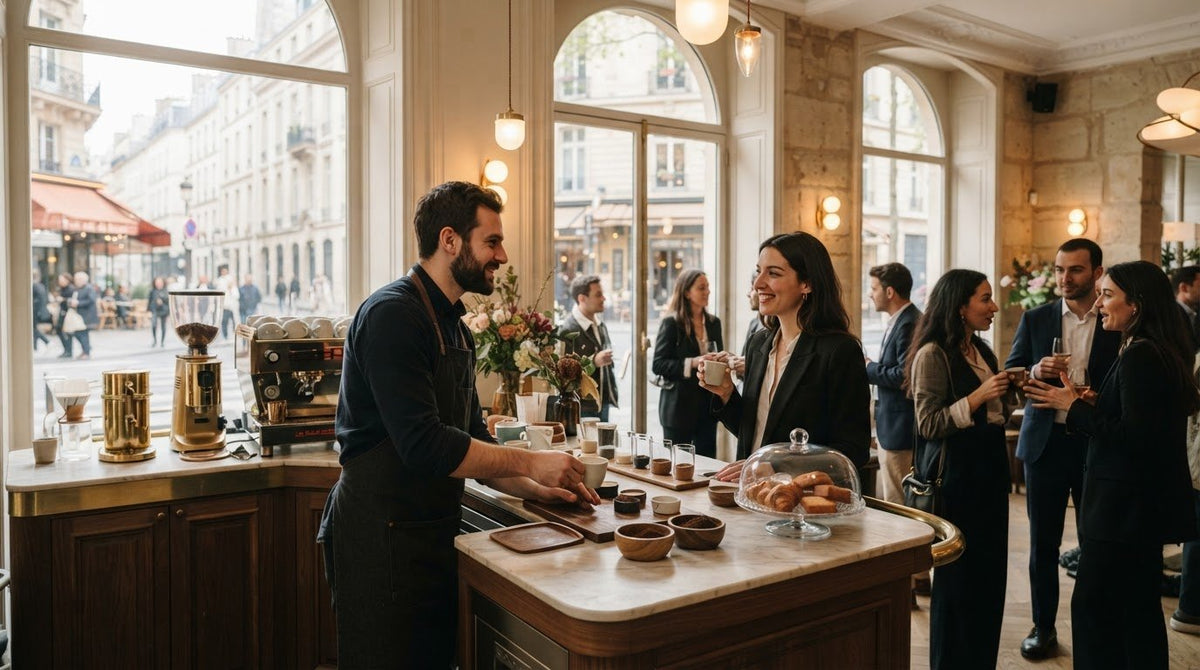
A coffee bar activation in Paris begins with choosing the venue, then making contact to learn about its access, private events, and privatization terms. The Bar du Marché is located at the corner of the Rue de Seine and Rue de Buci, a useful landmark for locating this Parisian address. The terms depend on the venue and the planned format.
The atmosphere matters, but it is not enough: the location, the welcome offered to the public, and the setting of the event also influence the choice. Do you want to organize a coffee-themed meeting or discover the possibilities offered by a Parisian establishment? Define your needs before deciding.
This article explains how to prepare a coffee bar activation in Paris, clarify your project, and consider access, private events, and privatization. You will also find guidelines for choosing a suitable format and anticipating practical needs. Careful preparation helps create a welcoming, elegant experience that is consistent with your event.
Key takeaways
- Identify the venue and prepare your initial contact by specifying the desired format, necessary access, and terms for a private event.
- Choose between a tasting, a pop-up space, and a workshop depending on the desired level of interaction and the organization of the event.
- Anticipate traffic, timing, and filming constraints: in Paris, bars generally close between 2 a.m. and 4 a.m., and cameras filming spaces open to the public require authorization from the police prefect, according to the CNIL.
- For a complementary gourmet activity, Angiolo offers artisanal ice cream and sorbet pots, an ice cream cart activity, and catering for events.
- Structure your project around the venue, the audience, and the desired experience to present a clear and appropriate request.
1. Contact and access
To prepare a coffee bar activation in Paris, start by locating the address of the planned venue. The Bar du Marché is located at the corner of the Rue de Seine and Rue de Buci. This landmark helps locate the establishment in the neighborhood and plan your route. Confirm the chosen address for the event before communicating the information to the guests.
Before making contact, gather the elements that define your request. Specify the purpose of the activation, the planned date or period, and the desired type of gathering. Distinguish an open tasting for visitors from a private event reserved for your guests. This clarification allows you to ask appropriate questions about access or privatization.
- Locate the exact venue. Note its name and full address, then look up directions from the guests' starting point. For the Bar du Marché, the corner of the Rue de Seine and Rue de Buci is a concrete geographical landmark. Add this landmark to your invitation, without substituting it for the address needed for navigation.
- Present your project in a few lines. Indicate whether it is a professional meeting, a presentation, or a coffee-themed gathering. Describe the desired experience, such as a tasting accompanied by time for discussion. A structured request makes it easier to discuss the welcome, access, and setting of a private event.
- Ask access questions. Ask where the guests should go and what visible landmark will help them find the entrance. If speakers or presentation elements arrive separately, specify their mode of arrival in your message. This allows you to concretely address the route to the venue without confusing public access and event organization.
- Ask about the terms corresponding to the format. For privatization, ask which parts of the venue are involved and how the guests will be welcomed. For an open activation, specify how the public accesses the experience. These questions concern different situations: an invited group does not necessarily follow the same route as walk-in visitors.
To make your request clear, group your questions by theme. First, describe the activation and the expected audience. Then, specify your needs regarding the address, entrance, and arrival of the guests. Finally, indicate the planned format for a private event or privatization. This organization helps the establishment understand your project and respond point by point.
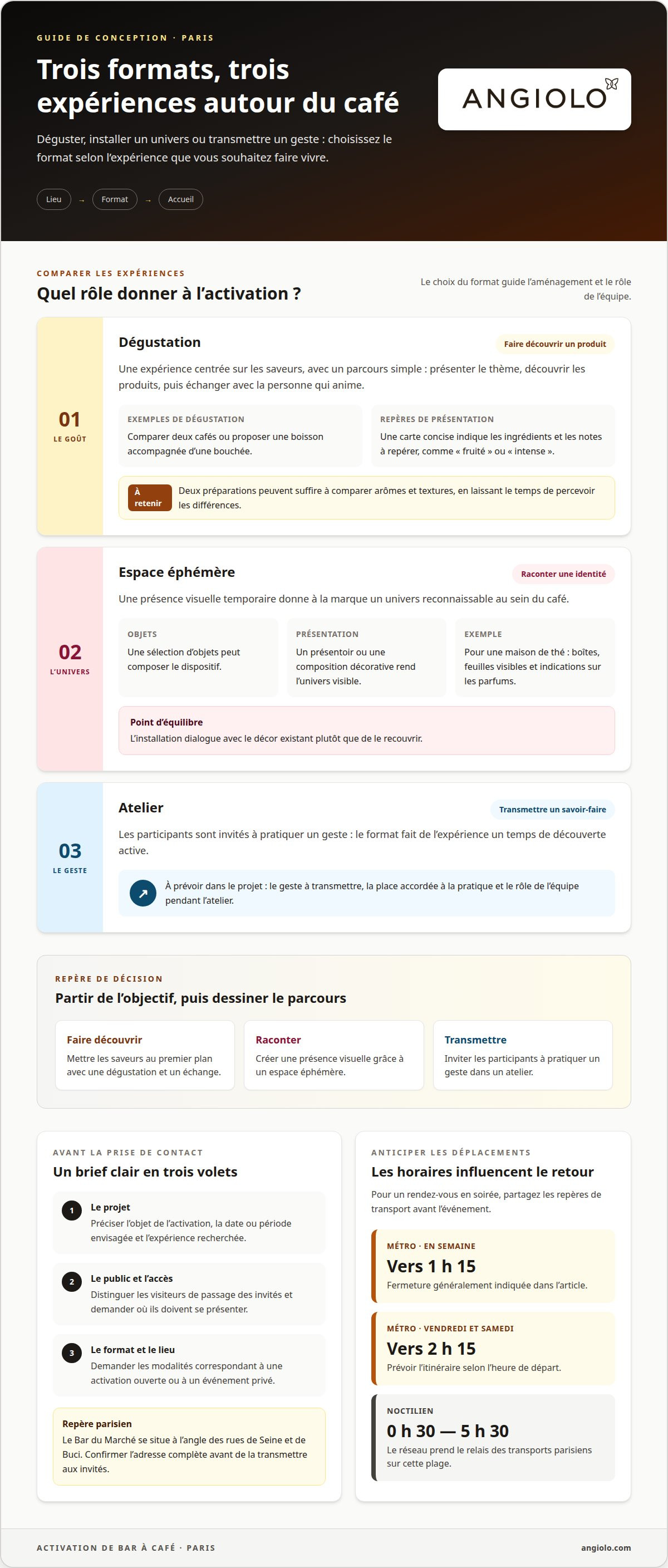
The journey also matters when choosing the time. In Paris, the metro generally closes around 1:15 a.m. on weekdays, and around 2:15 a.m. on Fridays and Saturdays. If your meeting extends into the evening, communicate these landmarks to the participants and plan a route suited to their departure time. The metro schedule can influence both access and the return journey.
The Noctilien network takes over Parisian transport from 12:30 a.m. to 5:30 a.m. For an activation that ends late, inform the guests of this operating window and invite them to plan their route according to their destination. Sharing a transport landmark in advance prevents everyone from having to discover their route at the time of departure.
Be sure to distinguish the address, access, and privatization. The address locates the venue; access directions specify how to reach it; privatization terms concern the welcome for a reserved event. This distinction makes your request clearer and allows you to ask questions suited to the planned format, whether it is a targeted meeting or an activation intended for the Parisian public.
4. Which activation formats work in a café: tasting, pop-up space, or workshop?
The format of an activation depends on the experience the brand wants to create. A tasting puts flavors at the forefront. A pop-up space presents a visual universe. A workshop invites participants to practice a skill. To choose, start with your objective: introduce a product, tell a story about an identity, or transmit expertise. This decision will guide the setup and the role of the team.
The tasting is suitable for a discovery centered on taste. In a coffee bar, a brand can have two coffees compared or offer a drink accompanied by a bite. A concise menu indicates the ingredients and notes to look for. Mentions such as "fruity" or "intense" provide indications without imposing an interpretation. The team can invite visitors to describe their own impressions.
The journey must remain intuitive. A short text presents the theme, then visitors discover the products and chat with the person hosting. Tasting two preparations, for example, allows them to compare their aromas and textures. It is better to allow time to perceive the differences than to multiply samples. A clear presentation also prevents the meeting from turning into a continuous sales pitch.
The pop-up space gives the brand a visual presence in the café. A selection of objects, a display, or a decorative arrangement can create a recognizable universe. For a tea house, the installation could bring together boxes, visible leaves, and indications about the scents. The setup must dialogue with the existing decor rather than cover it. A measured setup helps visitors understand the proposal at a single glance.
This format can introduce an identity even without individual interaction. Short texts present the origin of a product, its composition, or the inspiration behind a creation. The visitor can then linger or ask a question. To keep the presentation readable, prioritize the information: a catchy phrase, a few useful details, and a strong visual element. This simplicity highlights the details that truly distinguish the brand.
The workshop is relevant when the activation must involve the public. In a café, it can take the form of an introduction to preparing a drink or a demonstration of pastry decoration. Plan a simple progression: presentation of the skill, guided practice, then discussion. One instruction at a time helps novices follow along. The experience relies as much on the transmission as on the result obtained.
A successful workshop gives each participant a clear role. People first observe, then reproduce the skill, then comment on their creation. For an introduction to coffee, the host can explain how the grind changes the preparation before guiding a practice. The tools must serve the learning without distracting. Too many steps risk blurring the brand's essential message.
To compare the possibilities, examine what each format makes possible:
- Tasting: introduce a palette of flavors and invite comparison.
- Pop-up space: set up a visual universe that visitors explore at their own pace.
- Workshop: transmit a skill through a demonstration followed by practice.
The formats can be combined around a common idea. A presentation space can introduce a tasting, then a workshop can reveal a skill related to the product. However, avoid accumulating activities without a common thread. A brand activation in a Parisian coffee bar gains coherence when each step extends the same intention. The public thus discovers a constructed experience rather than a succession of solicitations.
5. What risks and constraints to anticipate for an activation in a Parisian coffee bar?
A successful activation takes concrete constraints into account: traffic, timing, setup, and filming. In a Parisian bar, the furniture, counter, and usual service often share the same space. A poorly placed setup can hinder visitors and the team. Before choosing it, locate its position on the venue's plan. Note the access points, service areas, and places where guests can stop.
The first risk is congestion. A tasting near the cash register can slow down orders. If the configuration allows, choose a location away from the main path. Plan an entrance and exit that are easy for participants to spot. Discreet signage can indicate where to start and wait. Keep the passage to the counter and exits clear, without adding superfluous furniture.
The pace of service requires precise coordination. A demonstration of coffee preparation attracts attention but can create a crowd. Define who welcomes the guests, who serves, and who answers questions. For a presentation with tasting, prepare the products and equipment before the public arrives. This distribution prevents one person from managing both the regular service and the activity.
The timing directly influences the flow. In Paris, most bars close between 2 a.m. and 4 a.m. Set an end time suited to the venue, then distribute the sequences within the planned window. A presentation, tasting, and discussion must follow one another without encroaching on the closing time. Communicate the closing time to the guests so they can organize their departure.
Filming requires special attention. If cameras film spaces open to the public, the setup must be authorized by the police prefect in Paris, according to the CNIL. This requirement concerns filming, not the simple presence of a photographer. Describe the use of cameras during preparation and, if necessary, clearly distinguish the filmed areas from the spaces accessible to visitors.
The equipment can also change the experience of the venue. A table that is too wide reduces traffic; a poorly oriented display hides the counter. Conduct a survey before finalizing the decor and note the available surfaces as well as the elements already present. For an activity around coffee, limit the setup to useful equipment, the products presented, and information materials. A controlled scenography enhances the experience without saturating the venue.
A backup plan helps the team react to unforeseen events. If the welcome point is too crowded, determine where to direct the visitors. If a demonstration runs late, identify the sequence to shorten without altering the experience. Agree on a clear signal between the activity and the staff. For a coffee bar activation in Paris, these coordination details matter as much as the staging.
Before opening, review the following points with the venue team:
- Traffic: guests join the activity without blocking the counter.
- Timing: the program respects the planned closing time.
- Filming: cameras filming a public space respect the requirement mentioned by the CNIL.
- Coordination: everyone knows who welcomes, serves, and transmits instructions.
A coffee bar activation in Paris gains fluidity when the experience and organization are planned together. To extend your thinking around a gourmet meeting, discover a culinary activity for events and imagine a format suited to your venue and your audience.
The choice of time slot can also depend on the desired atmosphere. To enjoy the atmosphere of Parisian dance bars at its peak, it is advisable to arrive after 10 p.m. In Paris, it is advisable to check the dance bar program in advance to choose the evenings suited to your tastes. For the most popular Parisian dance bars, it is advisable to book in advance, especially on weekends. For an activation, these landmarks can help anticipate the crowd and choose a time compatible with the planned flow, without confusing the habits of a dance night with those of a coffee service.
The recommendations also vary depending on the venue. At Café Nemours in Paris, it is advisable to arrive early to get a good spot on the terrace. The Saint Regis is located at the end of Île Saint-Louis in Paris and offers a place to watch the sunset over Notre-Dame. The author first entered Au Petit Fer à Cheval during her return in 2013. These examples remind us that it is better to take into account the setting and the desired experience when setting a meeting or preparing an activity. Specify the arrival instructions to the guests and check that the chosen time corresponds well to the selected format.
Angiolo: Artisanal ice cream and sorbet pots
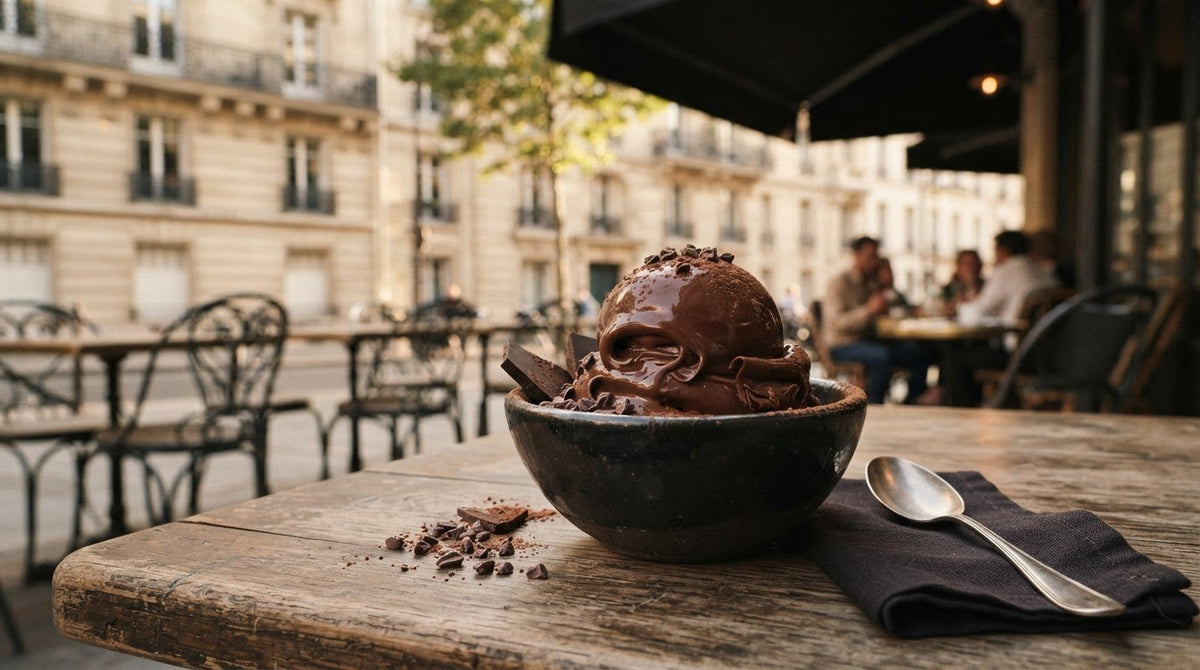
In Paris, Angiolo can complement a coffee-themed activation with a gourmet activity. Its hot coffee and chocolate activity for events accompanies discussions with a break featuring rich and comforting notes. To add an icy touch, artisanal ice cream and sorbet pots and frozen desserts offer another expression of artisanal expertise.
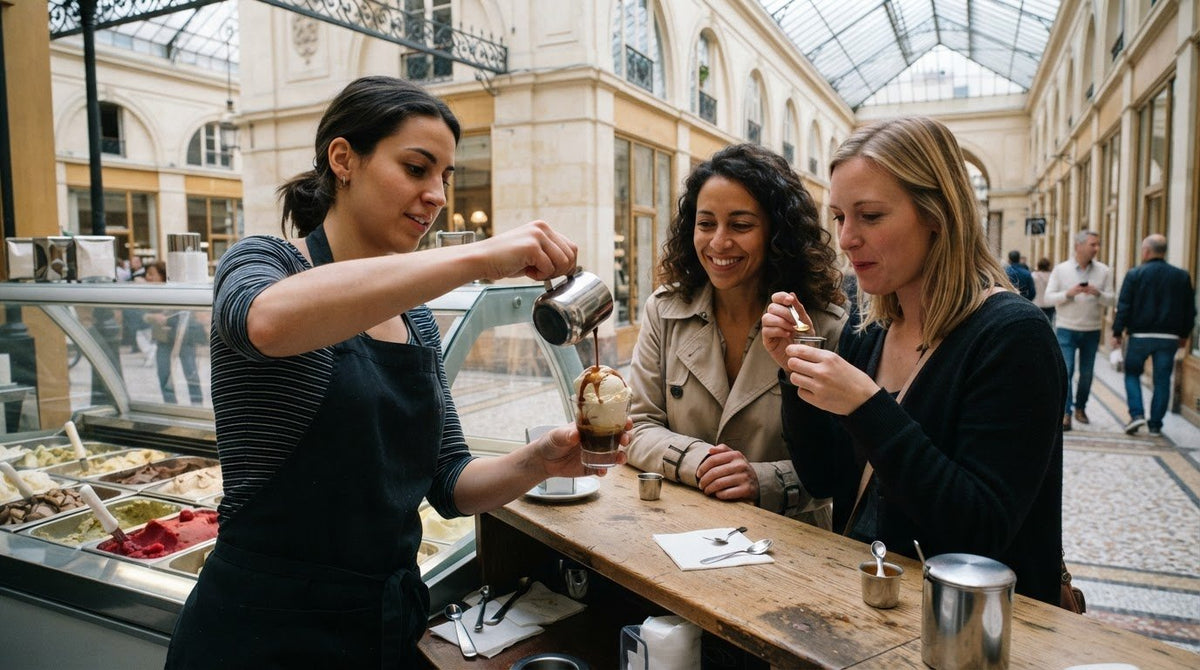
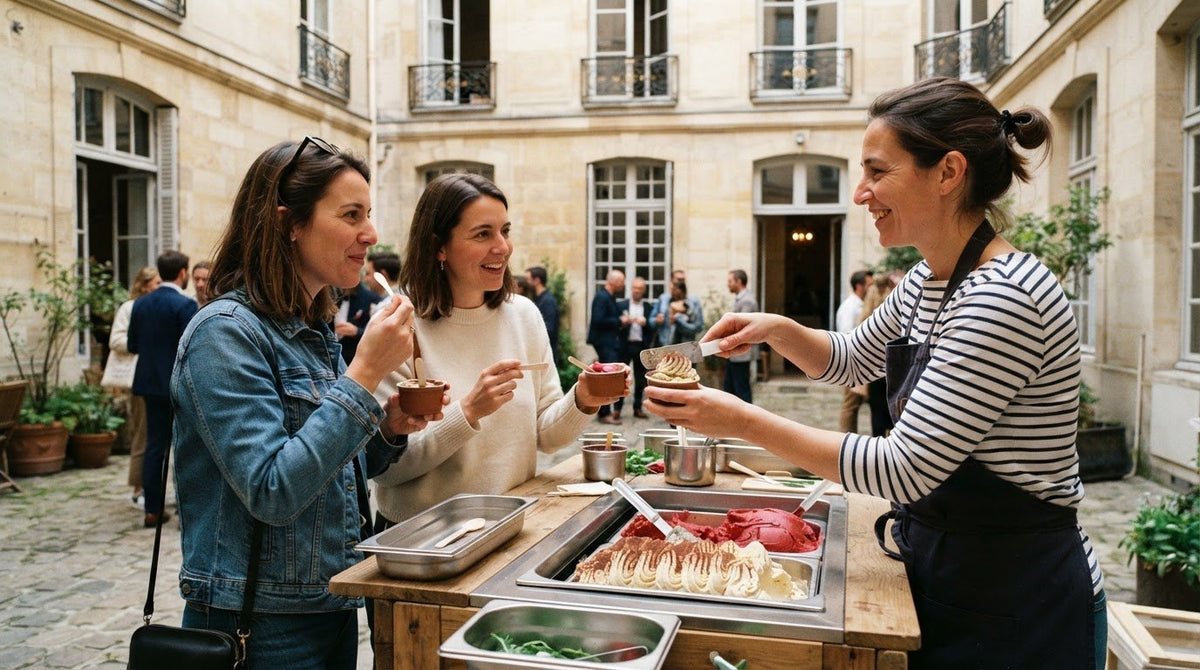
The ice cream cart creates a visible and convivial tasting moment, while the catering service for events integrates into a reception designed as a whole. These proposals are aimed at organizers who want to create a gourmet experience, combining the intensity of coffee, the freshness of sorbets, and the sweetness of desserts.
To imagine a gourmet activity suited to your event in Paris, contact Angiolo.
Imagine your next gourmet experience in Paris
A coffee bar activation in Paris can open onto a broader experience, where the tasting is extended by a frozen creation. To create this contrast, Angiolo offers artisanal ice cream and sorbet pots, an activity with an ice cream cart, and catering for events. Each option brings a different presence: delicate freshness, lively service, or gourmet accompaniment for a reception.
Before defining your format, imagine the moment you want to offer your guests. A tasting on the move, an elegant break between two discussions, or a gourmet table integrated into the event: this intention will guide your choices. Artisanal expertise and the attention paid to flavors can dialogue with the universe of your meeting.
Present your project to Angiolo to explore a proposal suited to your event. Contact Angiolo for your event and give shape to a gourmet, refined, and welcoming interlude.
Frequently asked questions about activations in a Parisian coffee bar
What is a brand activation in a Parisian coffee bar?
A brand activation in a Parisian café allows people to discover a brand through a hands-on experience. It can combine a product with a tasting, a visual presentation, or an interaction with the public. For example, a beverage brand can offer a signature creation to enjoy and showcase its ingredients. The goal is to bring its identity to life in a Parisian venue, rather than simply displaying it on advertising.
Which Parisian cafés offer private hire or brand events?
Private hire options vary depending on the Parisian venue and the planned format. For an activation in a Parisian café, distinguish between a private event and a public-facing activity, then ask about the options best suited to your project. Bar du Marché is located at the corner of Rue de Seine and Rue de Buci. To complement a reception with a gourmet activity, Angiolo offers event catering and an ice cream cart.