Marketing activation in Paris: make a lasting impression
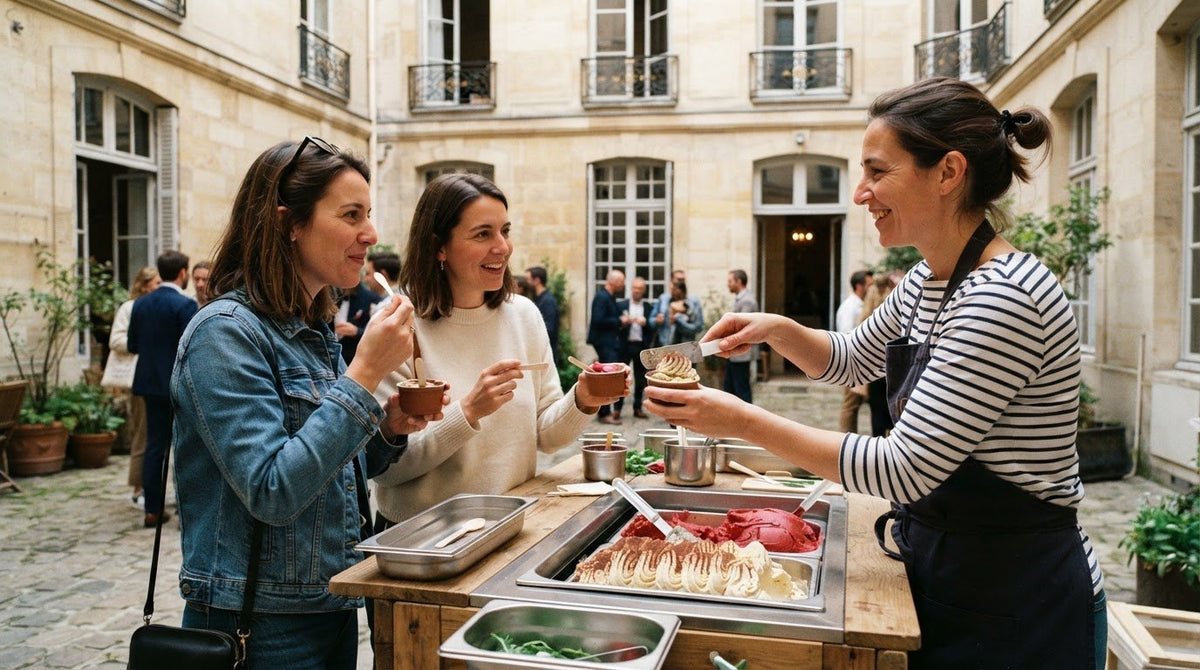
A successful marketing activation does more than catch the eye: it invites people to stop, participate, and retain a lasting memory of the brand. In Paris, Angiolo's services can take place in-store, at an event, or around a personalized culinary experience. The format depends on the location, the audience, and the experience you wish to create.
A message gains impact when it becomes a concrete experience. The key is to find the right format, combining visibility, quality of execution, and sensory pleasure without losing sight of your brand identity. Discover the main in-store activations, the possibilities for culinary personalization, and the elements that structure a turnkey service. From staging to welcoming guests, these guidelines will help you design a coherent, elegant, and memorable activation in Paris.
Key takeaways
- Choose an activation based on the location, the audience, and the experience you want to create.
- Enhance product visibility by designing an interaction that invites people to discover it, rather than a simple presentation.
- Personalize the culinary format to create a delicious moment consistent with your brand identity.
- Plan the preparation steps to ensure a smooth setup and a polished experience on the day of the operation.
- For an artisanal touch, explore activations with an ice cream cart and Angiolo's event catering services.
Experiential and event activations in-store
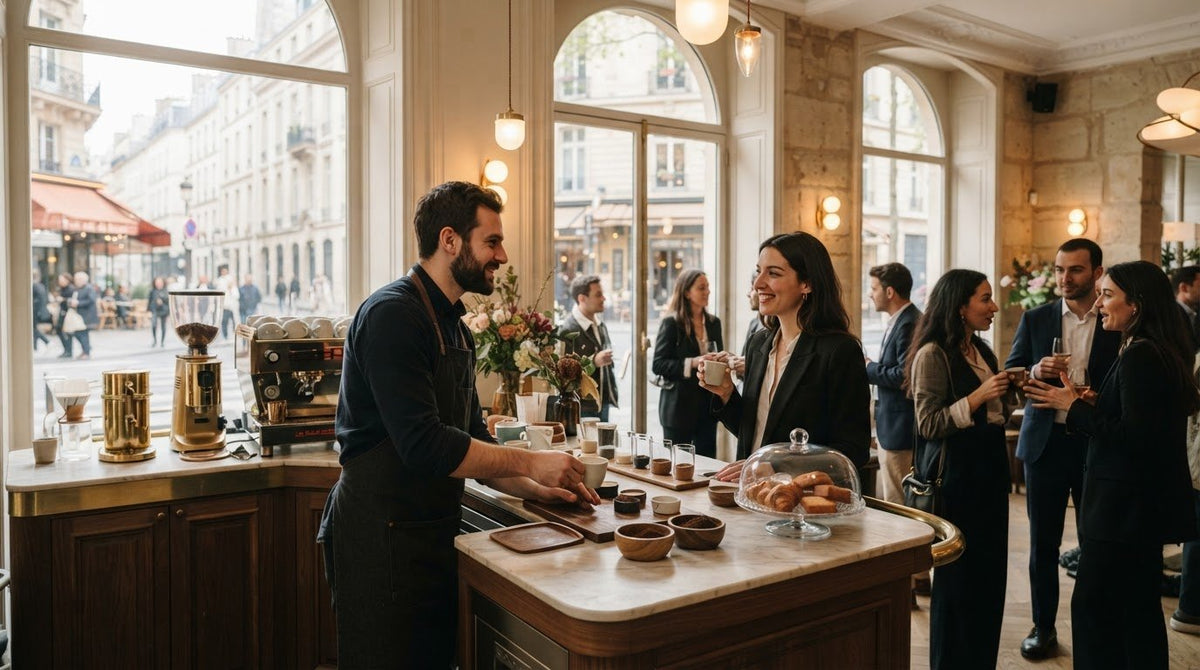
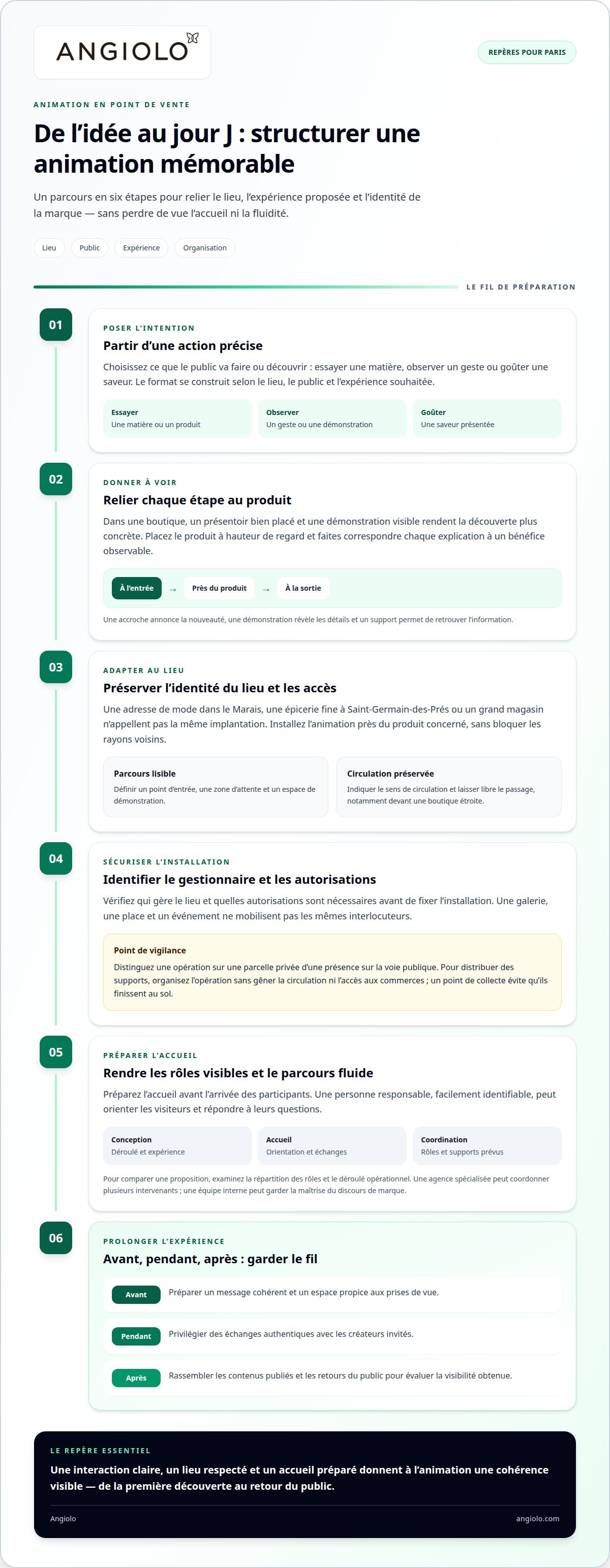
In a Parisian boutique, a demonstration transforms a passerby into an engaged participant: the visitor observes, interacts, and then discovers the product in action. An in-store activation can take the form of a presentation, a tasting, or a meeting with an artisan. The format should extend the identity of the location, whether it is a fashion address in the Marais or a delicatessen in Saint-Germain-des-Prés.
To design the experience, start with a specific action. Let people try a material, demonstrate a technique, or taste a flavor, rather than overwhelming them with multiple messages. A well-placed display, a demonstration visible from the aisle, and a simply worded invitation make the journey clear. In a department store, for example, the activation can take place near the relevant product without blocking access to neighboring aisles.
Distributing flyers or samples in public spaces depends on the location and the rules governing its use. Distinguish between an operation on private property and a presence on public roads, then organize the distribution so as not to obstruct traffic or access to businesses. A collection point can also prevent materials from ending up on the ground.
For an activation in Paris or on the French Riviera, first identify the venue manager and the authorizations required for the planned use of the space. An operation in a shopping arcade, on a public square, or during an event involves different stakeholders. Include this step in the schedule before finalizing the setup.
Welcoming participants is prepared before they arrive. Define an entrance point, a waiting area, and a demonstration space, then clearly indicate the flow of traffic. In Paris, an activation in front of a narrow boutique must leave the passage clear and avoid crowds on the sidewalk. An easily identifiable manager can guide visitors and answer their questions.
Internships in event communication and public relations provide an opportunity to observe these tasks in the field. An intern can help scout the location, prepare materials, manage registrations, and write a report after the operation. During an open house, they can also welcome guests and pass on their specific requests to the person in charge.
A specialization in influencer marketing and events links the lived experience to its digital reach. Before the event, prepare a coherent message and a space conducive to photography and filming. During the activation, prioritize authentic interactions with the invited creators. After the event, gather the published content and public feedback to assess the visibility achieved.
Event and marketing companies bring together distinct skills: design, public relations, welcoming, production, and digital communication. To compare a proposal, examine the division of roles, the operational flow, and the planned materials. A specialized agency can coordinate several service providers, while an in-house team can maintain control over the brand message.
On the French Riviera, heat, weather changes, and crowds can complicate an outdoor setup. Plan a backup location, protect sensitive materials, and organize deliveries according to site access. In Nice or Cannes, identifying unloading zones and the participants' route helps limit delays on the day of the activation.
Product visibility and consumer engagement
A product gains visibility when its presentation answers a concrete question from the public. In a Parisian boutique, a demonstration can show the texture of a fabric, the use of an object, or the composition of a recipe. Place the presented item at eye level, then link each explanation to an observable benefit. A clean staging helps visitors distinguish the product from the promotional materials surrounding it.
The journey is as important as the display. At the entrance, a hook announces the new arrival; near the product, a demonstration reveals its details; at the exit, a piece of material allows people to recall the information. For a cosmetics brand, for example, a consultant can present a texture on a testing area, then explain the application steps. This progression gives each step a specific role and encourages interaction.
A product launch can combine a presentation, hands-on experience, and a meeting with the creators. For a furniture brand, an open house in a Parisian space can introduce materials, finishes, and manufacturing choices. On November 28, 2026, the Sophia Ynov campus is organizing an open house. This example shows how a dated event can support the discovery of a location and its activities.
In Paris as on the French Riviera, an operation can draw inspiration from the character of the location while remaining faithful to the brand identity. A home décor brand can invite an artisan to present their expertise, while a food brand can offer a guided tasting. Keep the content clear: product name, distinctive detail, use, and an invitation to participate. These guidelines prevent a purely decorative activation with no clear link to the offering.
A promotional video can extend the experience lived in-store. To present a service, film the actual steps: preparation, welcoming, execution, and results. For a product, prioritize close-ups of materials and a demonstration of use. A short subtitled sequence can be broadcast on an in-store screen, then adapted for social media. Maintain the same words, colors, and information on every piece of material.
How do you measure the results and return on investment of a marketing activation? First, define a measurable objective, then identify appropriate indicators: visits, trials, requests for information, attributable sales, or video views. Compare the results to a reference period and document your method for distinguishing the effect of the activation from that of other promotional actions.
A tracking table makes analysis easier. Before the operation, note the objective and the collection method; during, record interactions and recurring questions; after, compare the observations with the available sales results. A boutique wanting to promote a new range can thus track requests related to the presented products, then adjust the location, message, or journey for the next activation.
Personalizable culinary activations
A marketing activation in Paris and on the French Riviera can transform a tasting into a moment of discovery, provided it serves a specific objective. To present a collection, imagine a delicate proposal that complements the materials and colors. During a professional meeting, prioritize an experience that is easy to integrate into the conversation without diverting attention from the event.
Start by defining the common thread: season, visual identity, the story of an ingredient, or the brand universe. A reception inspired by a Parisian garden can evoke floral notes through its colors and presentation, without attributing a particular origin to the ingredients. Distinguishing inspiration from provenance preserves the precision of the narrative and the guests' trust.
The menu composition requires a balance between intensity, texture, and clarity. Pair a bold flavor with a sweeter note, then limit the accompaniments so that each element remains perceptible. A chocolate tasting can, for example, compare a full-bodied preparation with a lighter version. The contrast should reveal the nuances without overwhelming the palate.
On the ground, adapt the service to the actions guests will be able to observe. A preparation plated at the last moment highlights the precision of the gesture; a portion ready to serve is better suited to a busy program. Identify the preparation area, the serving point, and the space where participants can stop without obstructing interactions or movement.
Personalization also applies to tableware and presentation. Simple containers can highlight the elegance of a reception, while a colorful composition complements a more expressive identity. A short menu, written in accessible terms, helps guests choose. Clearly present the ingredients and adapt the vocabulary to the information available about the proposed recipe.
For an indoor operation in Paris, take into account the lighting, furniture, and time allocated to each sequence. On the French Riviera, an outdoor setup requires special attention to exposure, shade, and equipment protection. Scouting allows you to choose where to set up the service and how to maintain a polished presentation during the event.
Digital tools can extend the experience without replacing it. An invitation sets the tone and specifies the theme; a page accessible on a phone can present the creations and their composition. After the meeting, gather impressions using a targeted question, for example about the most memorable flavor. This feedback informs the preparation of the next activation.
To prepare the project, gather the theme, audience, desired composition, venue constraints, and service flow on a single sheet. Have the titles and presentation information proofread before they are distributed. A marketing activation in Paris and on the French Riviera thus gains coherence, from the first message to the final tasting, while leaving guests with the memory of a precise gesture and a clear flavor.
Turnkey activation services
A turnkey service brings together several steps under a single coordination, from preparation to dismantling. For an inauguration at a Parisian hotel, it can combine design, setup, welcoming, and flow management. Before assigning tasks, precisely define the scope: the elements covered, those provided by the organizer, and the person who validates decisions on site.
A concise set of specifications serves as a reference for each service provider. State the objective of the operation, the profile of the guests, the desired atmosphere, and the site-specific constraints. For a presentation in a retail space, add a plan specifying the areas accessible to the public, the usable electrical outlets, and the planned location for the materials. These details limit divergent interpretations on the day.
A reverse schedule turns this information into successive deadlines. It can distinguish:
- the validation of the concept and visual elements;
- the transmission of instructions to the teams and service providers;
- the receipt of equipment and the check of its condition;
- the setup, opening to the public, and dismantling.
For each task, designate a person responsible and an alternate contact. At a trade show in Paris, the welcoming team should not have to interrupt their work to resolve a delivery issue. A contact list, an access map, and the reception instructions gathered in a single document facilitate coordination between the organizer, the venue, and the service providers.
On-site scouting allows you to check the actual dimensions and constraints. Measure the passages, observe the delivery access, and identify the available storage space. In a room with narrow access, this visit may lead to splitting the equipment delivery or moving its location. The setup plan then becomes a common reference, rather than a simple graphic intention.
Also plan backup solutions for foreseeable contingencies. If a screen does not work, a printed presentation can maintain the flow of the welcome. If the planned space becomes unavailable, a pre-scouted secondary location avoids rethinking the entire setup. Record these choices before the event, along with the name of the person authorized to validate them.
At closing, check the storage, the return of equipment, and the collection of reusable materials. An operational report can highlight discrepancies between the planned flow and the execution, without confusing logistical observations with sales results. For a traveling operation between several Parisian locations, this follow-up helps the team adapt the next setup and pass on more precise instructions.
The turnkey format is suitable when several tasks must follow one another without multiplying last-minute decisions. A written distribution, a shared calendar, and a person authorized to make final decisions provide concrete guidelines for each service provider, while leaving the organizer in control of the intention and the brand message.
What are the steps to organize a sales activation?
A sales operation is prepared by linking each decision to the next. A Parisian launch, for example, requires validating the message before creating the materials, then checking their consistency with the planned setup. Formalize this process from the start to avoid late changes.
- Appoint a project manager. Designate a person responsible for centralizing decisions and maintaining the schedule. They gather requests from the sales teams, communication teams, and the host venue, then flag necessary decisions before the creative or production work begins.
- Write the operation instructions. Gather the message to be conveyed, the authorized visual elements, the products involved, and the information the team can communicate. For a new collection, this sheet prevents the materials, presenters, and sales teams from using different wording.
- Validate the content. Have the texts, visuals, and practical documents proofread by the people responsible for the brand. Check that each piece of material addresses the same audience and remains understandable out of context. A poster intended for a shop window, for example, should announce the experience without repeating the entire content of a detailed presentation.
- Establish the production schedule. Organize tasks according to their dependencies: text validation, material creation, equipment preparation, then transmission of instructions. Plan a proofreading step before any distribution. This check allows you to correct information or a graphic element before it is reproduced.
- Distribute roles. Specify who welcomes the guests, who presents the offering, who answers questions, and who records feedback. Share the same instructions with all service providers. A prepared team can thus handle a request without interrupting the flow or giving contradictory information.
- Prepare backup options. Identify elements that may need to be changed, such as a digital platform, presentation, or location. Determine a backup solution in advance and identify the person who can approve it. This foresight maintains consistency if a planned resource becomes unavailable.
- Organize a review. Gather the team’s observations, questions received, and participant feedback. Compare them with the initial objective, then record which adjustments should be implemented or discarded. A concise report turns the day’s findings into useful decisions for the next operation.
Once these steps are in place, adapt the program to the venue and the brand’s identity, rather than applying a one-size-fits-all model. To add a gourmet dimension to your project, you can plan your promotional event around a culinary format that complements the occasion.
Angiolo: Artisanal Ice Cream and Sorbet Cups
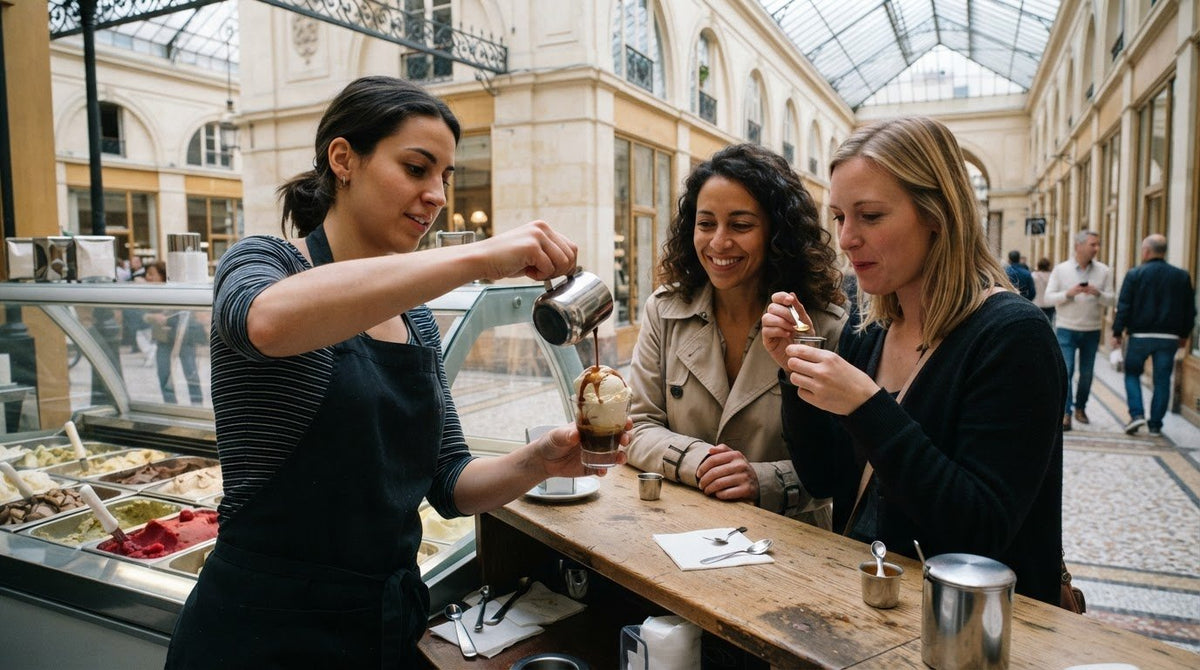
Angiolo supports events that wish to combine a convivial activity with artisanal ice cream creations. To welcome guests in an elegant setting, an ice cream cart activity makes the tasting the centerpiece of the occasion. Artisanal ice cream and sorbet cups are also suitable for a reception where everyone can enjoy them at their own pace. Catering services for events and frozen desserts offer other formats, to be chosen according to the venue and the spirit of the occasion.
For a promotional operation, a professional reception, or a brand event, the choice is based on the audience, the program, and the desired experience. A live tasting creates a moment of connection; frozen desserts extend the gourmet note of the meal. To discuss your project and choose the right format, contact Angiolo.
Give Your Next Event a Signature
The next step is to choose the moment that your guests will spontaneously associate with your brand. A gourmet break, an artisanal touch, or a refined tasting can become this landmark, provided it extends the event’s identity rather than diverting from it. For a marketing activity in Paris or on the French Riviera, imagine an experience that brings together the venue, the audience, and the pleasure of flavors.
An advance discussion allows you to clarify the desired atmosphere and the role of the activity in your event. Angiolo can guide you in this process around a gourmet moment tailored to your project, with the care given to artisanal creations.
Contact Angiolo for your event and bring to life a unique, elegant, and generous experience.
Frequently Asked Questions About Marketing Activities
Which agencies offer marketing activity services in Paris and on the French Riviera?
In Paris and on the French Riviera, event agencies design brand operations, while specialists work on specific formats. Angiolo is an artisanal ice cream maker who offers culinary services that can be incorporated into an event. To choose the right contact, first determine whether your needs concern the overall strategy, event coordination, or a specific experience, such as a tasting around ice cream creations.
What types of marketing activities are available for events and points of sale?
Formats range from product demonstrations to tastings, as well as launches, meetings with artisans, and culinary activities. In a home décor store, a presentation of materials can enrich the discovery; at a reception, a gourmet counter can punctuate the welcome. The choice depends on the venue, the time available, and the desired interaction: observing, trying, or discussing.
Which marketing activities work best to attract customers in-store?
The most relevant format gives passersby a clear reason to enter and participate. A demonstration visible from the shop window is suitable for a product whose method of use deserves to be shown; a tasting draws attention to a new food product. In both cases, make the invitation clearly visible, place the activity near the relevant offer, and plan a smooth flow into the aisles.
What permits are required to organize a marketing activity in Paris or on the French Riviera?
First, identify the venue manager and the permits required for the planned use of the space. The procedures vary depending on whether it is a gallery, a public square, or an event. Include them in the schedule before finalizing the installation.