The Excellence Criteria for Artisanal Gelato: The Connoisseur's Guide (2026)
An electric-colored ice mountain is never a sign of a passionate chef, but of clever marketing. In a world where the term "artisan" is too often overused, true distinction lies in the simplicity and nobility of raw materials. You have undoubtedly experienced that disappointment when faced with a texture that is too fatty or an artificial flavor that betrays the absence of real savoir-faire. This is a common frustration for discerning palates seeking uncompromising excellence.
It's time to reclaim power over your senses and demand perfection. This exclusive guide provides you with the essential artisanal gelato quality criteria to separate the exceptional from the illusion. We invite you to immerse yourself in high-precision culinary art, where every detail matters. You will become capable of judging an ice cream maker with a single glance at their display, deciphering ingredient lists with the eye of a connoisseur, and selecting the quintessential frozen dessert for your most prestigious receptions. Prepare to transform every tasting into an experience of absolute distinction and pure sensory pleasure.
Key Takeaways
- Distinguish the legal appellation from the reality of craftsmanship to unmask industrial preparations hidden behind the word "artisanal".
- Master the fundamental artisanal gelato quality criteria, from the sobriety of natural hues to the correct height of the tubs in the display.
- Learn to demand exceptional ingredients, such as Piedmontese dried fruits, systematically refusing artificial colors and flavors.
- Understand the science of texture and overrun to favor a dense ice cream that melts harmoniously without overwhelming the palate.
- Become capable of selecting the ideal partner for your prestigious events by evaluating the technical precision of the frozen desserts offered.
The 'Artisanal' Appellation: Decoding the Legal Framework and its Limitations
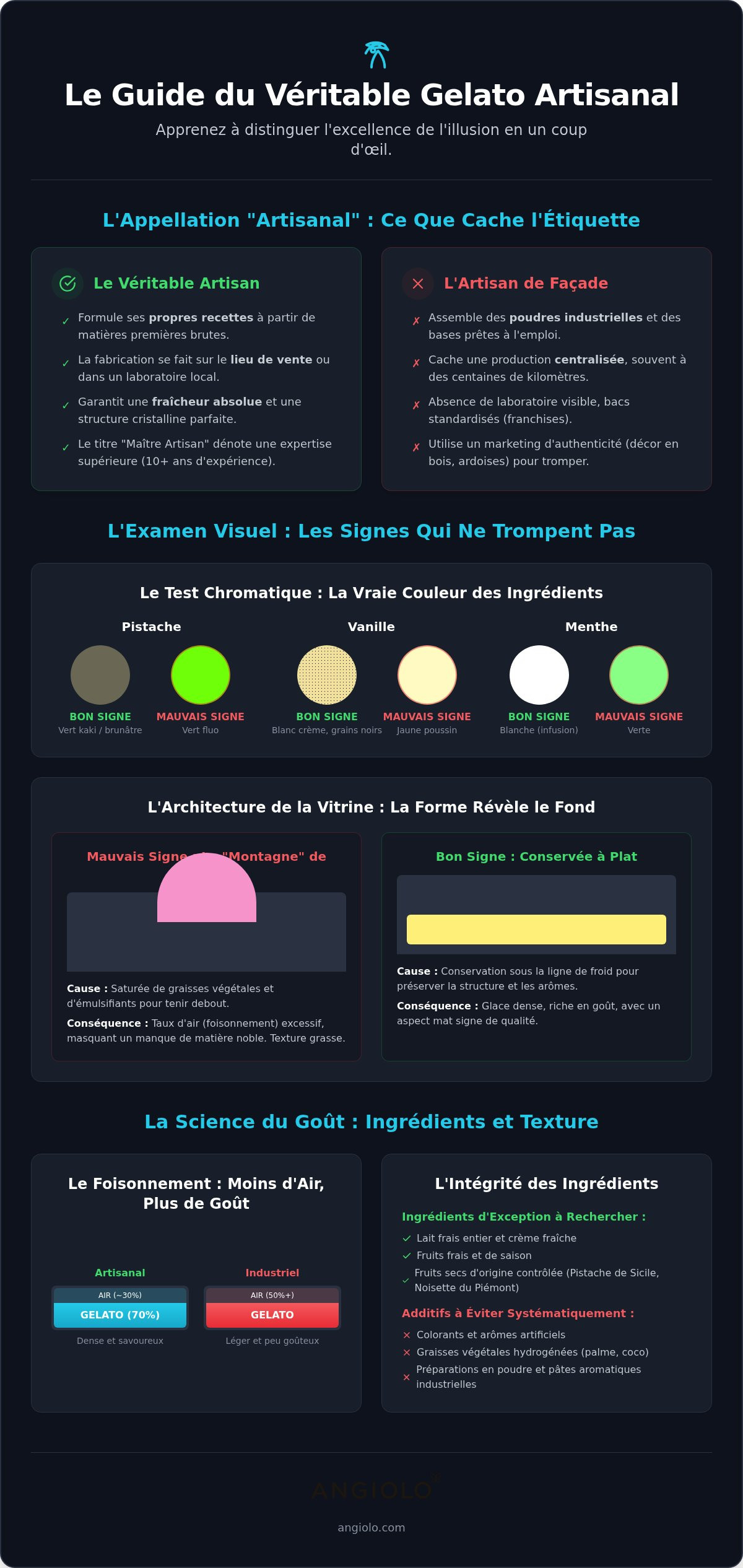
In France, the title of artisan ice cream maker is not merely a marketing adornment. It is a grade. To claim it, the professional must demonstrate a state diploma, such as a CAP (Certificate of Professional Aptitude) in ice cream manufacturing, or several years of experience validated by the Chambre de Métiers et de l'Artisanat (Chamber of Trades and Crafts). However, a subtle nuance often escapes the general public. The law requires manufacturing, but it does not define the origin of all components. An ice cream maker can be legally artisan while assembling industrial powders and pre-designed aromatic pastes. This is where the line is drawn between the executor and the creator. True savoir-faire lies in formulating one's own recipes, without ready-made bases.
Production at the point of sale, or in a local laboratory in Paris, guarantees absolute freshness. Ice cream that has not undergone long transport retains its crystalline structure and aromatic intensity. This transparency in preparation is one of the essential artisanal gelato quality criteria for the connoisseur. It separates genuine craftsmanship from superficial craftsmanship.
Artisan vs. Maître Artisan: What are the differences?
The title of Maître Artisan (Master Artisan) represents the pinnacle of professional recognition. It requires ten years of practice or obtaining a Brevet de Maîtrise (Master's Certificate), demonstrating technical expertise and a commitment to transmission. At Angiolo, we transcend these administrative frameworks through the heritage of a Sicilian master ice cream maker. Transmission is not just a matter of diplomas; it is a quest for purity. The Chamber of Trades protects the title, but only the palate recognizes the signature of a master who refuses the compromises of ease. Our chef, world-renowned, is a Professor at the Gelato University of Bologna (Italy) and at the Ducasse and Ferrandi Pastry Schools in Paris.
The trap of 'artisan-style' franchises
Beware of raw wood decor and calligraphed slates. Visual marketing excels at mimicking the codes of authenticity to attract passers-by. Many brands use ambiguous appellations to mask centralized, industrial production. Ice cream made hundreds of kilometers away, then stored, loses its nobility. The main indicator remains the absence of a visible laboratory or the presence of standardized tubs, identical from one shop to another. Identifying brands that use pre-prepared industrial mixes requires attention. A worthy artisan works with raw materials: fresh milk, seasonal fruits, and exceptional dried fruits.
Visual Examination: Identifying Quality at First Glance
The eye is the first judge of excellence. Even before the spatula releases the aromas, the display case reveals secrets that only the connoisseur knows how to decode. An overly flashy aesthetic often hides technical poverty. Conversely, a certain visual sobriety is a guarantee of absolute mastery. These artisanal gelato quality criteria allow for immediate dismissal of mass-produced products disguised as artisanal art. The nobility of a product is read in its restraint.
The chromatic test: Vanilla, Pistachio, and Mint
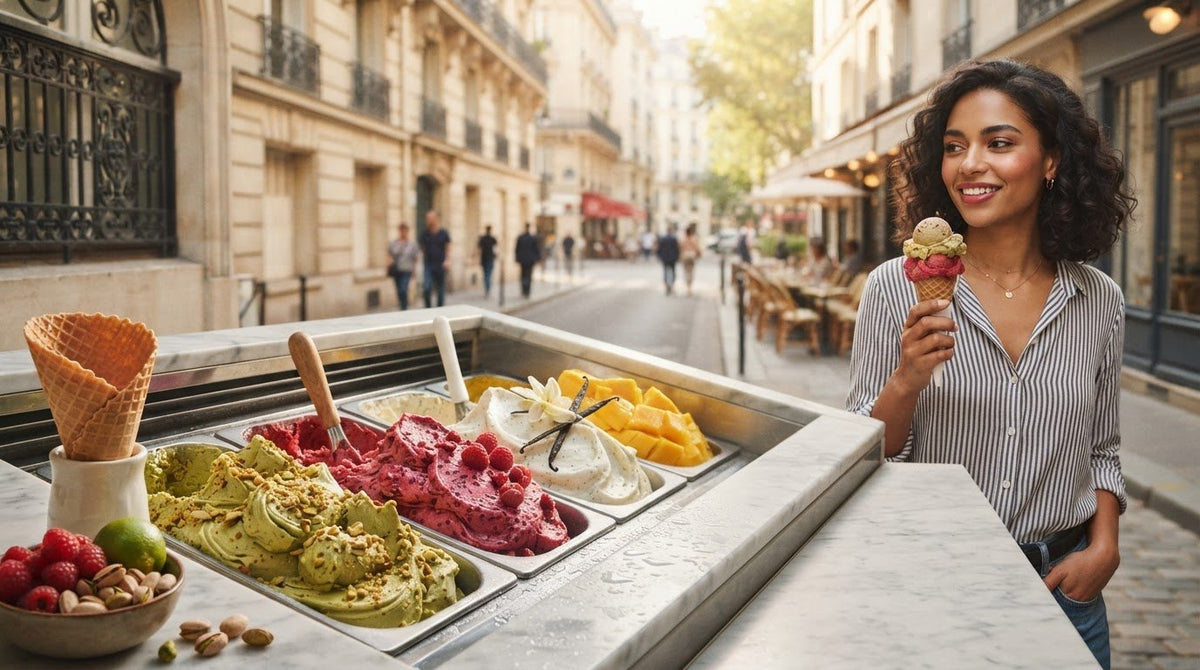
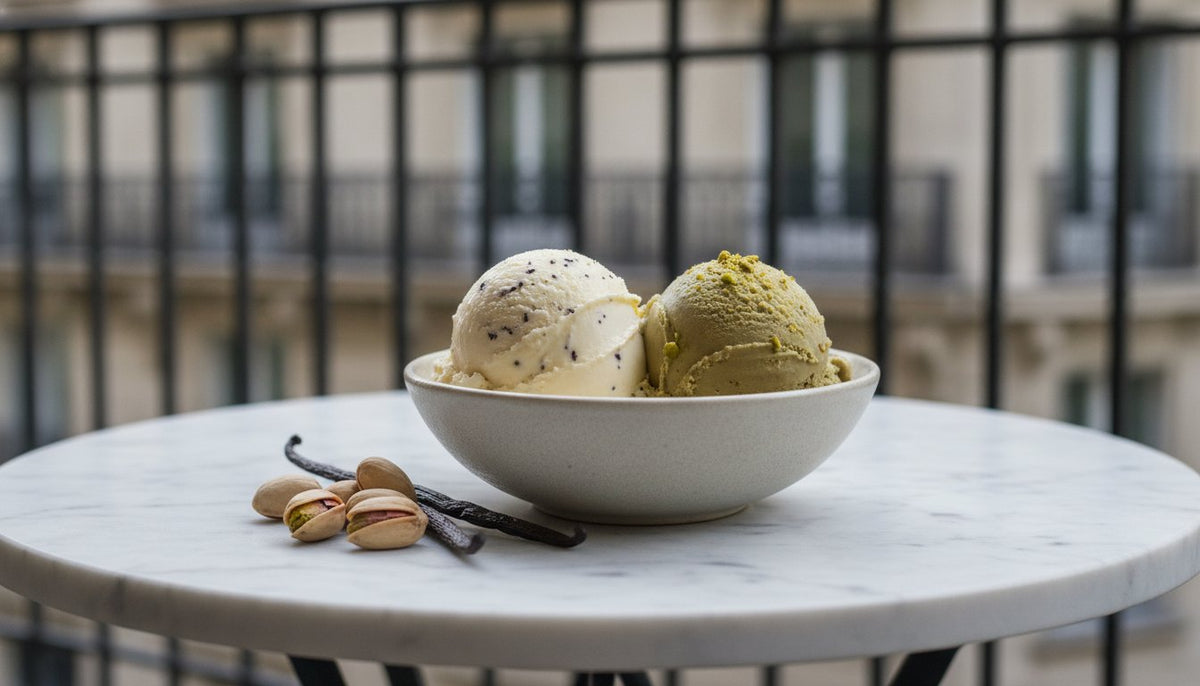
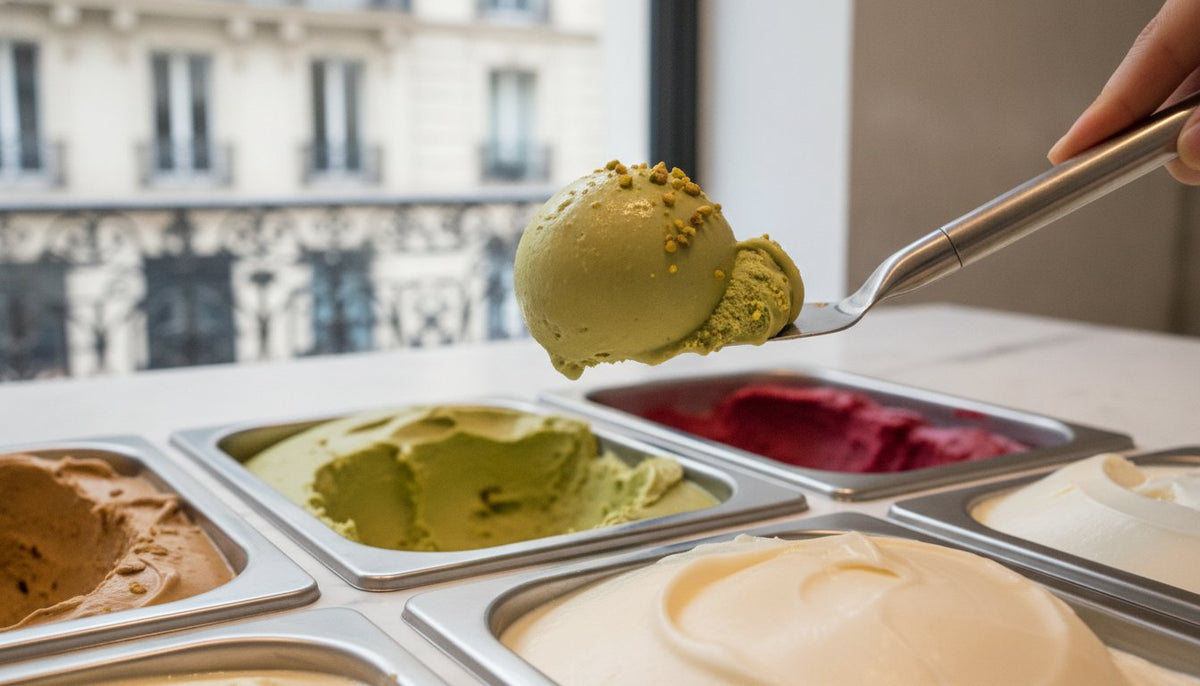
Nature has its own palette, often more subtle than that of synthetic dyes. Authentic vanilla should never display a bright chick-yellow. It is a delicate cream-white, sprinkled with tiny black specks, evidence of the use of whole pods. Pistachio, for its part, is the ultimate test. Flee from neon green. A green Bronte pistachio, like the one used at Angiolo, naturally tends towards brown or khaki green after roasting. The case of mint is equally revealing. Infused from fresh leaves, the ice cream remains white. If it is green, it is artificial.
Display case architecture: revealed overrun
One of the most spectacular pitfalls is the mountain of ice towering largely above the tub. This architectural feat is nothing natural. To stand without melting at room temperature, these ice creams are saturated with hydrogenated vegetable fats and emulsifiers. They also contain an excessive amount of air, a phenomenon called overrun. In Italy, bills aim to decode the legal framework to limit this air content to 30%, thus guaranteeing superior gastronomic density.
Exceptional ice cream must be kept below the cold line of the display case. The visual aspect must be matte, a sign of stable temperature and fine crystallization. A shiny or oily appearance often betrays partial thawing or excess sugars. The ultimate sign of distinction remains the use of covered stainless steel tubs, called pozzetti. By protecting the creation from light and air, the ice cream maker prioritizes taste integrity over advertising staging. Careful examination of these artisanal gelato quality criteria transforms a simple gourmet break into a moment of haute cuisine. This is the rigor you can discover through our signature creations at your next prestigious events.
Ingredient Integrity: The Foundation of Angiolo Taste
Purity is a requirement. A master ice cream maker does not compromise with artifice; he orchestrates noble raw materials. One of the most rigorous artisanal gelato quality criteria lies in the absolute traceability of each component. Where industry settles for substitutes, the exceptional artisan selects whole farm milk and fresh creams of rare creaminess. This demanding sourcing guarantees a neutral and rich base, capable of carrying flavors without distorting them.
Respect for natural cycles is another distinguishing mark. Offering a strawberry sorbet in the middle of January is a gastronomic heresy. It betrays the use of frozen purees or tasteless out-of-season fruits. At a master ice cream maker's, the menu evolves with the rhythm of the harvests. The balance of sugars also plays a crucial technical role. The artisan uses complex sugars, such as dextrose or inverted sugar, not to saturate the palate with sweetness, but to lower the freezing point and achieve perfect suppleness right out of the display case.
The nobility of dried fruits and oilseeds
The aromatic persistence of a gelato depends on the concentration of its fruit pastes. A Piedmont hazelnut or a Bronte pistachio tolerates no dilution. The difference is striking. An industrial preparation often contains filler vegetable oils and synthetic flavors to mimic intensity. In contrast, Angiolo favors pure pastes, roasted with precision to release the fruit's natural essential oils. It is this direct link to the terroir that creates an unprecedented length on the palate, transforming each spoonful into a sensory journey to the volcanic lands of Etna or the hills of Alta Langa. To extend this immersion into the excellence of Italian terroir, discover Amore Mio and its traditional cuisine rich in flavors.
Sorbets: the art of pure fruit
Sorbet represents the purest expression of fruit. To achieve excellence, the percentage of raw material must be predominant, well beyond the minimum standards required for the appellation. A true artisanal sorbet is distinguished by a dense texture, far from the watery lightness of a simple water ice. The quality of the water used, ideally purified, is fundamental so as not to alter the subtlety of the aromas. This quest for absolute freshness is at the heart of our approach for artisanal sorbets in Paris, where each creation celebrates a return to raw and authentic taste. The complete absence of colorings allows the natural color of the fruit to express itself in all its simplicity.
The Science of Texture: Creaminess and 'Clean Finish'
Texture is the silent language of the ice cream maker. It tells the story of churning and the accuracy of dosages. An exceptional gelato is not content with being cold; it must be silky. One of the most technical artisanal gelato quality criteria concerns overrun. Unlike industrial ice cream, which can contain up to 100% air to double its volume at a lower cost, true artisanal gelato limits this intake to between 20% and 30%. This density guarantees superior taste intensity and a slow, almost creamy melt that coats the palate without ever overwhelming it.
The final sensation, the "Clean Finish", is the signature of purity. Mediocre ice cream often leaves a greasy or waxy film on the tongue, a sign of the use of low-quality vegetable fats or an excess of heavy cream. Artisanal excellence is recognized by this ability to disappear after releasing its aromas, leaving the mouth fresh and ready for the next bite. This is the triumph of balance over saturation. The melting should also be regular. Ice cream that remains frozen despite the heat or turns into an airy foam reveals the presence of chemical additives designed to stabilize the artificial.
Gelato vs. Ice Cream: the balance of fats
Italian gelato is not just a variant of ice cream; it's a different philosophy. It generally contains between 6% and 9% fat, compared to 10% to 25% for industrial standards. This relative lightness is not just a dietary matter. Fat is a thermal insulator. The less there is, the faster and more intensely the taste buds perceive the subtlety of the aromas, such as the delicacy of orange blossom or the power of a grand cru cocoa. The secret lies in slow churning. This process incorporates very little air and creates a micro-crystalline structure of absolute finesse, making the texture incredibly smooth without resorting to excessive cream.
The palate test: analyzing persistence
The connoisseur's palate hunts for suspicious elasticity. If the ice cream seems to "bounce" or stretch like gum, it probably contains an excess of stabilizers. Similarly, an intense, almost numbing cold sensation betrays a poor thermal balance. Exceptional ice cream is enjoyed at a higher temperature than its industrial counterpart, often around -12°C. This relative warmth allows the flavors to fully develop without freezing the sensory receptors. This millimeter-perfect precision defines high culinary precision. To experience this perfect texture, discover our artisanal frozen desserts designed according to the rules of Sicilian art for your most refined events.
Choosing Your Ice Cream Maker in Paris: From Shop to Event
Paris, the capital of gastronomy, abounds with enticing addresses. However, finding the rare gem requires a rigorous method. The tasting ritual begins with silent observation, then continues with a strategic choice. To evaluate the artisanal gelato quality criteria, avoid complex flavors with evocative names that often mask a mediocre base. Purity is judged on simplicity. An artisan who masters their classics will know how to surprise you with their signature creations, because technique never lies about fundamental flavors.
The choice of container also decisively influences your sensory experience. While the cone offers a pleasant crunch, the cup remains the purist's choice. It better preserves the silky texture of the gelato by limiting warming from hand contact. This thermal protection allows you to savor every aromatic nuance without the haste imposed by accelerated melting. This science of preservation and respect for the product is what Angiolo embodies as a benchmark artisanal ice cream maker in the capital.
The Vanilla and Pistachio Test
These two flavors are the ultimate arbiters for any artisan ice cream maker. Vanilla reveals the quality of the dairy base and the nobility of the pods used. Observe the density of black specks and the subtlety of the aromatic bouquet, which should linger without being overwhelming. Pistachio, on the other hand, immediately betrays the care taken in sourcing and processing. A deep, slightly earthy roasted nut flavor indicates an exceptional product free of additives. If you are looking for Where to eat excellent ice cream in Paris?, always start with this revealing duo to validate the establishment's expertise.
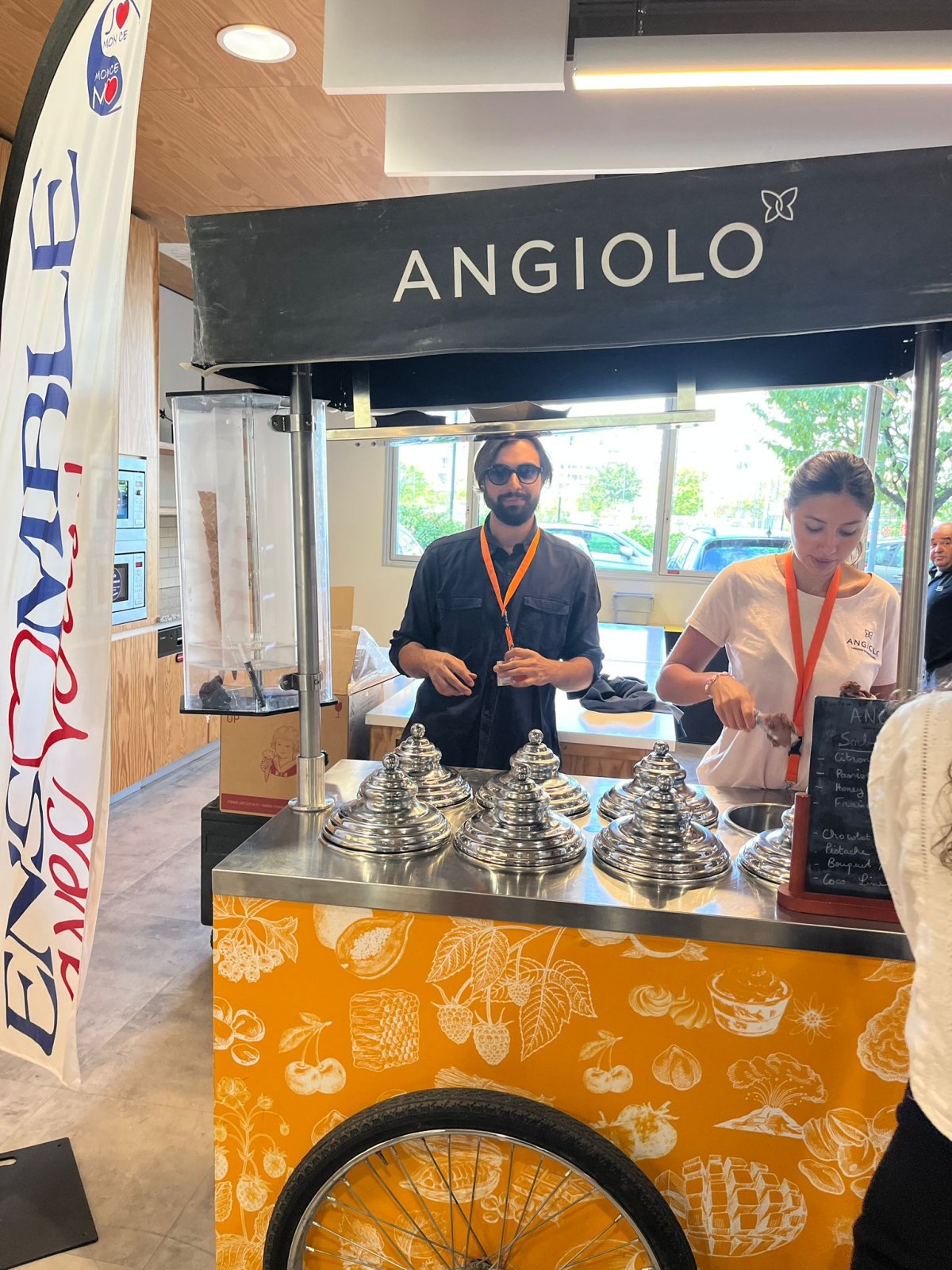
Enhance your receptions with an ice cream cart
Excellence should not be limited to the walls of a shop. Transposing these artisanal gelato quality criteria into the context of a prestigious event represents the pinnacle of catering service. Whether it's an elegant wedding, a corporate seminar, or a private reception, the entertainment must reflect the same level of technical demand. A top-tier provider is recognized by their ability to maintain perfect creaminess and an ideal serving temperature, even outside their usual laboratory.
The installation of an ice cream cart animation in Paris brings an irresistible touch of Italian refinement to your celebrations. It's not just a dessert service. It's a sensory performance. Guests witness the ritual of serving with a spatula, ensuring natural aeration of the ice cream at the precise moment of tasting. Choosing a provider who daily crafts their creations in Paris ensures a freshness that no industrial solution can match. The distinction of a successful reception lies in these details of high culinary precision, where the demands of preparation finally meet the fluidity of access to exceptional products.
Awaken Your Palate to Absolute Distinction
The quest for frozen perfection does not stop at a simple tasting; it is an education of the senses. You now possess the keys to unmasking the artificial and celebrating authentic artisanal craftsmanship. From chromatic sobriety to the density of an air-free texture, these artisanal gelato quality criteria transform every gourmet moment into a true ceremony of haute cuisine. Recognizing excellence means, above all, respecting the nobility of the land and the rigor of a centuries-old heritage. This demand for quality applies to all of Italian culinary art; if you wish to explore other facets of this savoir-faire, you can learn more about A Mano Ristorante and its exceptional Mediterranean table.
Bringing this expertise to the forefront is Angiolo's daily mission. Under the direction of a visionary Sicilian master ice cream maker, we create creations where prestigious ingredients, such as Sicilian pistachio or Piedmont hazelnut, express themselves with unprecedented purity. Whether for an intimate break or to enhance your most prestigious receptions, we place culinary precision at the service of your emotions. Discover the excellence of our Angiolo artisanal ice creams and let yourself be guided towards an experience of rare distinction. The pleasure of exceptional gelato is now within your reach; all that remains is to savor it with the discernment it deserves.
Frequently Asked Questions: The Art of Exceptional Gelato
What is the main difference between artisanal ice cream and industrial ice cream?
Artisanal ice cream is defined by the use of raw ingredients, such as fresh milk and exceptional dried fruits, without pre-prepared industrial bases. In contrast, industrial ice cream relies on hydrogenated vegetable fats and synthetic flavors. At Angiolo, our master ice cream makers ensure daily production in Paris. This approach guarantees absolute freshness and a unique taste signature, far from mass production standards.
Why is the term 'artisanal' not always a guarantee of quality?
The artisan label protects the manufacturer's diploma but does not govern the origin of their ingredients. A professional can legally bear this title while using industrial powder mixes. To identify true artisanal gelato quality criteria, it is important to favor recipe creators who process Piedmont hazelnuts or Bronte pistachios themselves. The distinction lies in the total mastery of the formulation, from the laboratory to the pot.
How to recognize ice cream without chemical additives?
Ice cream free from chemical additives can be recognized by its natural texture and a Clean Finish on the palate. It should leave no greasy or waxy film after tasting. The absence of excessive stabilizers results in a silky, never elastic or gummy, structure. The colors should remain subtle, reflecting the original color of the components. If the taste is clear and disappears harmoniously, you are faced with a pure and meticulous creation.
Why is the color of pistachio ice cream a good indicator?
Pistachio is the ultimate test for an ice cream maker. A fluorescent green color betrays the use of artificial colorants such as synthetic chlorophyll. True artisanal pistachio, particularly the Sicilian variety we cherish at Angiolo, has a brown or khaki green hue after precise roasting. This chromatic choice demonstrates absolute respect for the raw product and a desire to offer authentic aromatic persistence, without misleading visual artifice.
Is it normal for artisanal ice cream to melt faster?
It is perfectly normal for exceptional gelato to melt faster than industrial ice cream. This proves the absence of chemical hardeners and a low air content. Served at around -12°C so as not to numb your taste buds, artisanal gelato prioritizes immediate sensory pleasure. Its melting should be fluid and creamy, a sign of a perfect thermal balance between technical sugars and noble fats like fresh cream.
What is overrun and why is it important for quality?
Overrun refers to the amount of air incorporated during churning. This is a crucial parameter for gastronomic density. While industrial ice cream can contain 50% air to increase its volume, artisanal gelato is limited to 20 or 30%. This low proportion of air intensifies the perception of flavors and creates a dense and creamy structure. This is one of the major artisanal gelato quality criteria that defines high-precision Italian culinary art.
Why are artisanal ice creams often stored in covered containers?
Covered containers, or pozzetti, represent the pinnacle of artisanal preservation. They protect creations from oxidation caused by air and light damage, thus preserving the subtlety of the most fragile aromas. Unlike open display cases that prioritize marketing presentation, pozzetti guarantee a constant temperature and impeccable hygiene. This is the choice of Parisian ice cream makers who prioritize taste integrity over simple visual contemplation.
How to check the freshness of a fruit sorbet?
The freshness of a sorbet is verified by its texture and seasonality. In Paris, a strawberry sorbet tasted in the middle of winter often indicates the use of frozen purées. An exceptional sorbet should be smooth, without perceptible ice crystals, and offer a vibrant raw fruit flavor. The "sorbet plein fruit" (full-fruit sorbet) label guarantees a generous proportion of raw material. The color should remain matte and natural, proof of recent production without unnecessary colorants.