Difference Between Industrial and Artisan Ice Cream: The Guide to Frozen Excellence
What if the secret to a perfect frozen treat lies not in what is added, but in what one refuses to compromise on? With shelves saturated with marketing promises, the true difference between industrial and artisanal ice cream sometimes becomes imperceptible to the untrained eye. You have undoubtedly felt this frustration: a texture that is too airy and vanishes too quickly, an artificial taste, or an undecipherable list of additives that spoil the sensory pleasure. This is the price of yield versus the nobility of passion.
Learn to distinguish true artisan ice cream making from mass-produced goods to savor excellence. Through this guide, we reveal the secrets to reading an ingredients list like an expert, visually recognizing an authentic creation, and understanding the invaluable gesture of the artisan. Precision. Purity. Intensity. Dive into a world of high culinary precision where every spoonful tells the story of respected raw materials and perfectly mastered timing.
Key Takeaways
- Master the art of deciphering labels to prioritize the purity of a composition without superfluous additives or stabilizers.
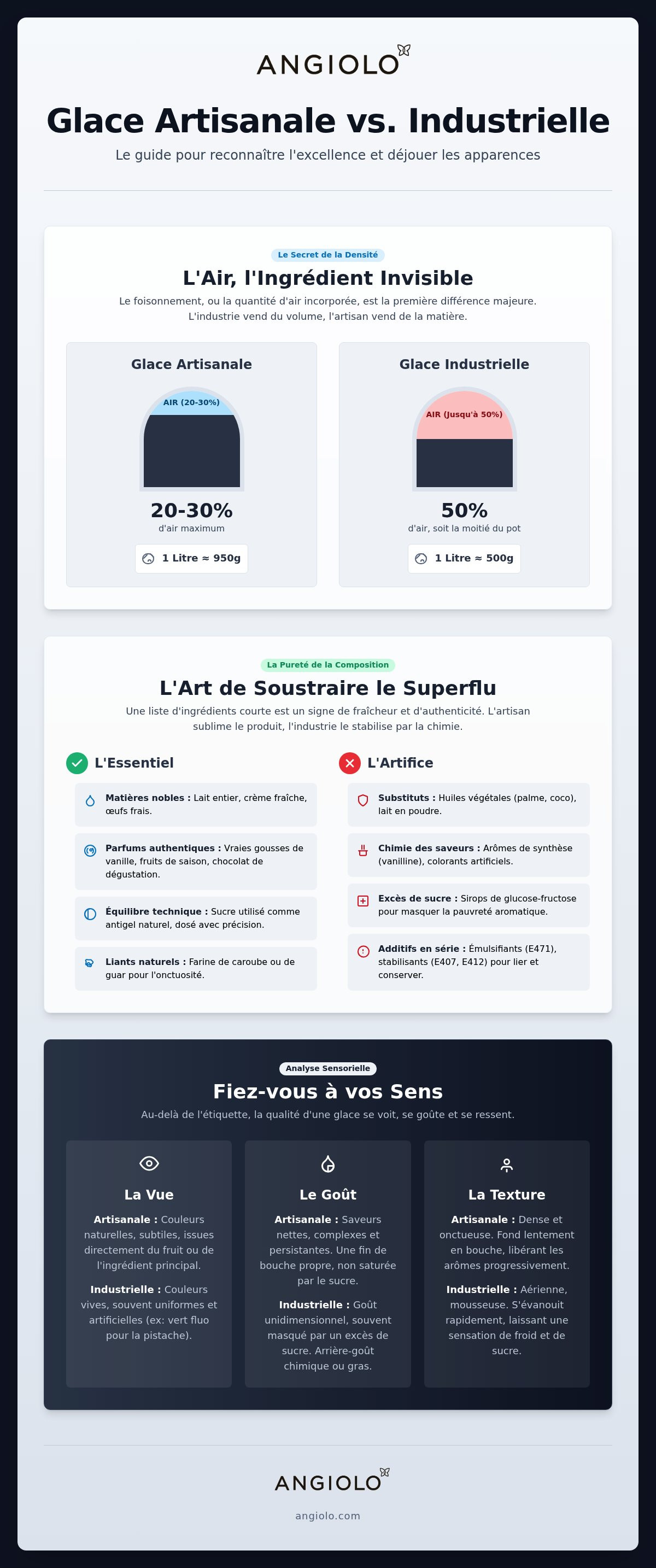
- Understand the difference between industrial and artisanal ice cream by measuring the impact of overrun on flavor intensity and the product's actual density.
- Learn to visually identify excellence through the subtlety of natural hues and the thermal behavior of ice cream in a display case.
- Outsmart marketing ploys by distinguishing the protected title of Artisan Glacier from simple advertising promises devoid of technical expertise.
- Discover how slow churning and the rigorous selection of noble raw materials transform a simple treat into a unique gastronomic experience.
The Essence of Ice Cream: Composition and Nobility of Ingredients
Artisanal ice cream is not a mere consumer product. It is a living substance, a delicate emulsion that evolves and breathes. The difference between industrial and artisanal ice cream lies first and foremost in this radical choice of purity. While industry seeks eternal stability through chemistry, the artisan works with the fragility of freshness. To understand this fundamental distinction, one must return to the definition of ice cream: a precise balance between water, fats, and sugars.
The artisan favors the nobility of fresh cream and whole milk. These noble fats carry aromas with an elegance that hydrogenated vegetable oils, favorites of the industrial sector, cannot match. These vegetable substitutes, often derived from palm or coconut, are chosen for their ridiculously low cost. Yet, they leave an unpleasant greasy film on the palate and stifle the flavor. As for flavors, the gap is just as vast. A true Bourbon vanilla bean releases a complex, woody, almost caramelized aroma. Synthetic vanillin, on the other hand, offers only an artificial, short, and one-dimensional note.
Sugar: Technical Balance vs. Flavor Enhancer
Sugar is not just for pleasing the palate. In the art of ice cream making, it is an essential technical agent that acts as a natural antifreeze. It defines the smoothness of the texture at low temperatures. However, the industry tends to oversweeten its preparations. This practice allows it to mask the aromatic poverty of basic ingredients and create taste dependence. Conversely, the artisan measures their additions with jeweler-like precision. They use natural sugars to ensure a clean finish, without that feeling of saturation that immediately calls for a glass of water. The difference between industrial and artisanal ice cream is thus tasted in the persistence of a fruit or chocolate, and not in the persistence of sugar. If you appreciate bold flavors, you might also discover East of Chicago Pizza Orlando for its authentic and generous specialties.
Additives and Stabilizers: The Choice of Purity
Look closely at the back of a supermarket tub. Codes E471, E412, or E407 often reign supreme there. These emulsifiers and stabilizers allow the incorporation of low-quality fats and artificially retain air to increase volume. The artisan, however, prefers the nobility of natural binders. Carob bean gum or guar gum is enough to give body and creaminess to the preparation. This choice is not just a matter of prestige; it directly influences your digestive comfort. The shorter the list of ingredients, the more intense and authentic the sensory experience. This is where the secret of exceptional ice cream lies: the art of subtracting the superfluous to keep only the essential.
The Secret of Density: Overrun and Air Control
The invisible is invited to the table. Behind the apparent creaminess lies a mathematical reality often ignored: overrun. This technical term refers to the incorporation of air into the preparation during churning. While a minimum of air is essential to prevent the creation from becoming a compact block of ice, the difference between industrial and artisanal ice cream is measured here to the nearest gram. Industry has turned air into a lever for profitability. A liter of supermarket ice cream often weighs barely 500 grams. You are literally buying 50% air.
Artisanal demandingness imposes a completely different rigor. The master ice cream maker limits overrun to a ratio of 20 to 30%. This maximum density is not accidental. It guarantees a slower, deeper, richer release of flavors. On the tongue, dense ice cream does not vanish. It coats the palate. It unfolds its aromatic complexity with a persistence that the foamy textures of mass distribution cannot match. This is the transition from a simple sensation of cold to a true gastronomic tasting experience.
The Weight Test: An Immediate Quality Indicator
For the informed amateur, volume is an illusion. Weight is the truth. Food ice cream regulations strictly govern denominations, but they allow great freedom regarding the amount of air incorporated. For the same volume, an artisanal tub weighs almost twice its industrial counterpart. This extra mass represents a higher concentration of noble ingredients: fruits, cream, gourmet chocolate. Choosing our artisanal ice cream and sorbet tubs means prioritizing this full and generous substance over artifice.
Texture and Creaminess: The Art of Slow Churning
The fineness of ice cream depends on the size of its crystals. Slow churning, characteristic of artisanal know-how, breaks down ice crystals before they grow. This avoids the flaky effect, that unpleasant crunch under the tooth. Manual control of churning ensures a silky texture, obtained solely by the quality of natural emulsions. Where industry uses vegetable fats to simulate a creamy fat, the artisan relies on the molecular structure of milk and cream. The sensation is radically different: a natural suppleness, without heaviness, that respects the purity of the original product.
Sensory Analysis: How to Recognize Quality at a Glance
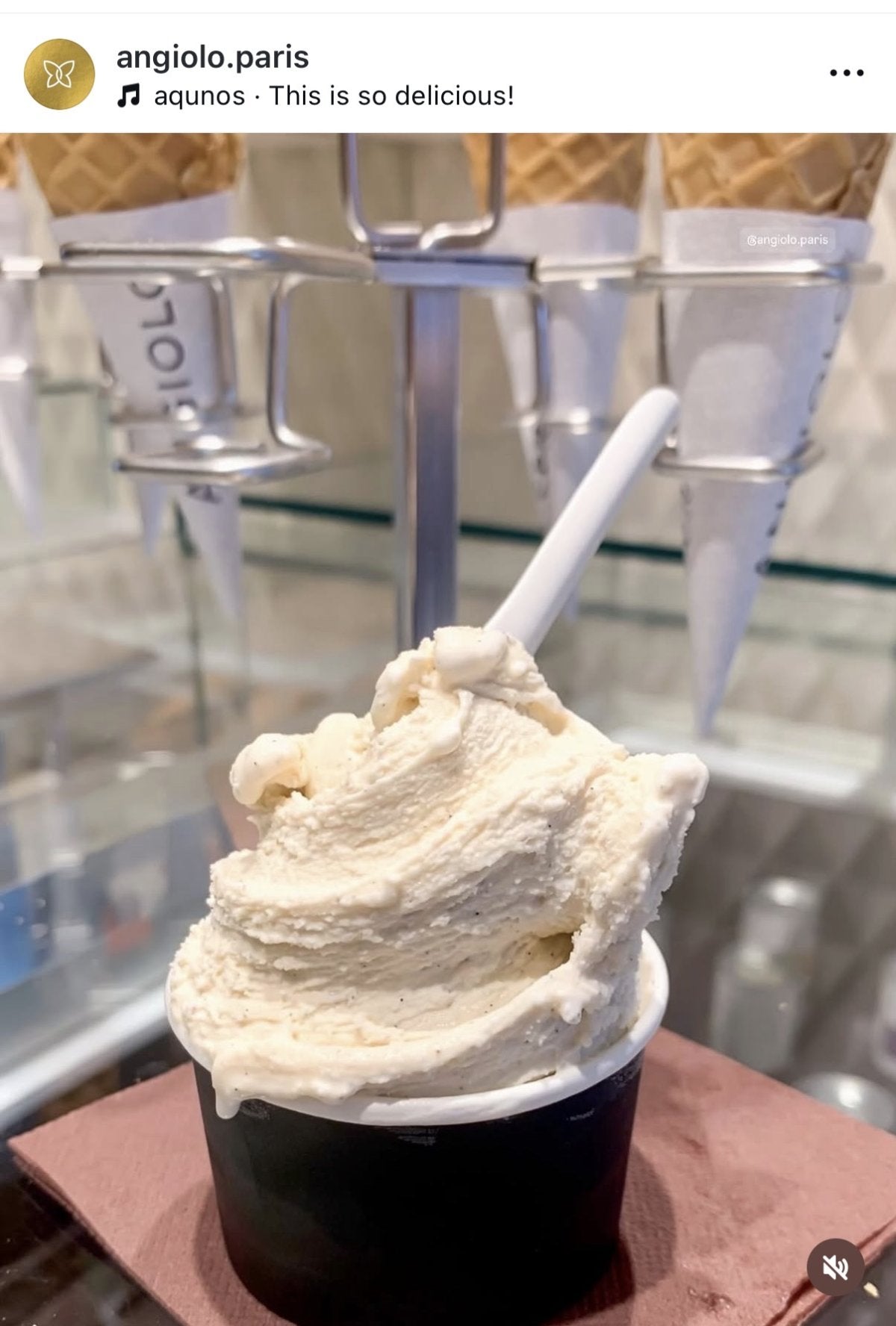
Excellence can be guessed even before the first spoonful. For the haute cuisine enthusiast, the visual examination of a display case is a crucial step. Observe the ice cream's posture. Vertiginous domes that defy the laws of physics are often an alarm signal. A creation that does not melt under the spotlight betrays an overload of stabilizers and chemical emulsifiers. The difference between industrial and artisanal ice cream is embedded in this visual humility. A true ice cream, dense and with little overrun, naturally follows gravity. It sits flat, protected from oxidation.
The serving temperature also plays a revealing role. Industrial production is often served at extremely low temperatures to mask the poverty of its ingredients by thermally numbing the taste buds. Conversely, an artisanal creation is ideally enjoyed between -12°C and -14°C. This relative softness allows the aromas to fully unfurl upon contact with the tongue. Our artisanal ice cream tubs meet this technical requirement, preserving a silky structure that merely awaits to reveal its secrets.
The Semiotics of Natural Color
The case of mint is the most striking example of industrial drift. An infused mint leaf never yields a green color. It offers a crystalline or slightly amber hue. Emerald green is the sure sign of a synthetic dye. For artisanal sorbets in Paris, the brilliance must come exclusively from ripe fruit. An authentic pistachio exhibits bronze or earthy tones, far from artificial neon green. This chromatic sobriety is the signature of purity. A color that appears dull to the eye is often the promise of intense, unadulterated aroma.
The Tasting: Attack, Mid-Palate, and Finish
An exceptional tasting follows a precise three-part rhythm. The attack should be an immediate caress of freshness, without the characteristic cold burn of water-saturated products. Then comes the mid-palate, where the low air presence allows complex flavors to unfold. Cocoa reveals its woody bitterness, hazelnut its roasted roundness. The finish is the final test. Quality ice cream leaves the palate clean and light. If you feel a greasy film or a waxy coating sensation, you are dealing with hydrogenated vegetable oils. The difference between industrial and artisanal ice cream is thus judged by the clarity of the finish, naturally inviting the next spoonful.
Marketing vs. Reality: Avoiding Label Traps
Marketing is a master of illusion. In the world of frozen desserts, words are often chosen to evoke a nostalgia that the product itself is unable to deliver. The difference between industrial and artisanal ice cream hides behind vague qualifiers like "artisan taste" or "old-fashioned recipe." These mentions have no legal value. They are merely semantic embellishments intended to mask mass production. To savor excellence, one must learn to look beyond the facade.
In France, the designation "Artisan Glacier" is a protected title. It is not improvised. To claim it, the creator must hold a state diploma such as a CAP or BEP, or demonstrate three years of professional experience. This is a guarantee of technical rigor. Also, be wary of the mention "made on site." While it guarantees that the churn operated in the back of the shop, it says nothing about the product's origin. Many retailers simply assemble industrial powdered bases and pre-prepared aromatic pastes. True nobility lies in the selection of raw materials: a Sicilian Lemon pressed in the lab or a Piedmont Hazelnut precisely roasted.
Deciphering the Ingredient List in 30 Seconds
The truth is written in small print. Apply these three golden rules to unmask artifice. First, the order of components. The first ingredient listed is the most present. If water or sugar precede milk, cream, or fruit, move on. Next, hunt for substitute vegetable fats like palm or coconut oil. They are the undeniable sign of a search for profit at the expense of finesse. Finally, distinguish "natural flavors" from simple "flavors." The latter are synthetic molecules created in a test tube to mimic nature without ever achieving its complexity.
The Difference Between 'Glacier' and 'Reseller'
A true manufacturing laboratory is recognized by its transparency and rhythm. Ask questions about the origin of the fruits or the provenance of the milk. A passionate expert will answer with surgical precision. Also, observe the menu. Seasonality is the barometer of authenticity. Offering a strawberry sorbet in the middle of January is a gastronomic heresy that betrays the use of industrial purees stored year-round. The artisan, however, follows the earth's calendar to capture the fruit at its peak. To experience this uncompromising purity, discover our artisanal ice cream and sorbet tubs crafted with absolute respect for the product.
The Angiolo Experience: When Craftsmanship Becomes Gastronomy
At the heart of Paris, craftsmanship rises to the rank of culinary art. At Angiolo, the difference between industrial and artisanal ice cream is no longer just a simple technical theory, but an immediate sensory evidence. Founded by a Sicilian master ice cream maker, our house perpetuates a strong cultural heritage while exploring audacious new taste frontiers. We have made a radical and uncompromising choice: the total absence of artificial flavors, colorings, or preservatives. Each creation is an ode to purity, where raw materials reign supreme in our Parisian laboratory. This passion for quality products is found throughout Italian gastronomy, inviting gourmets to discover Bellasimo to savor a traditional and authentic meal.
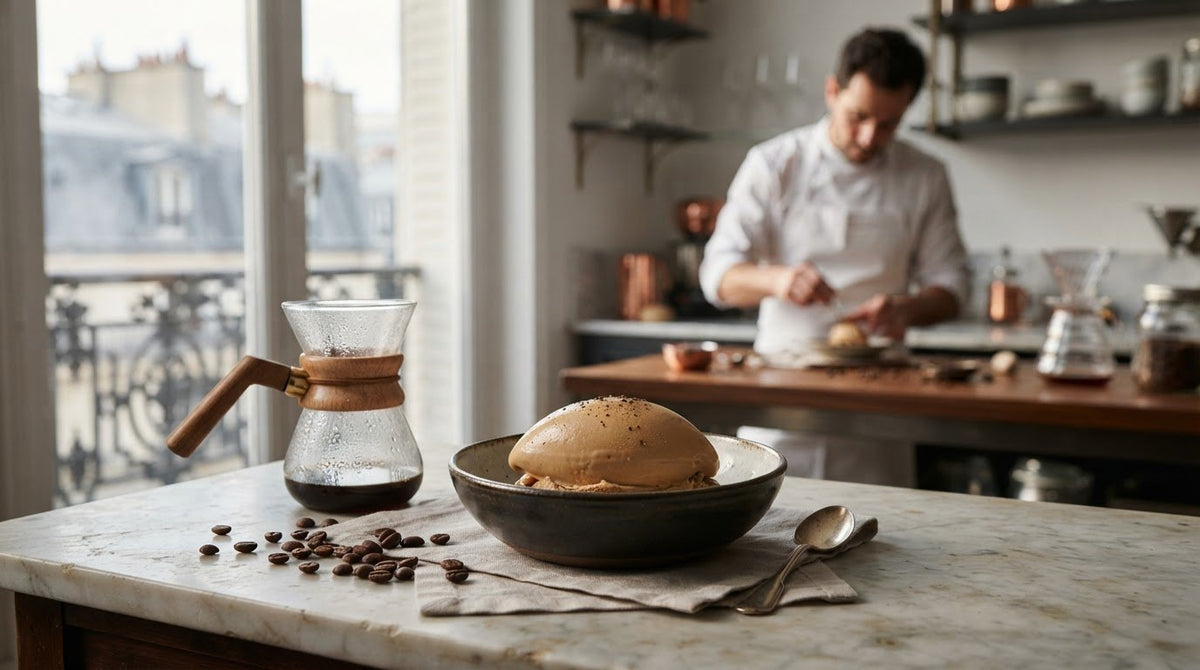
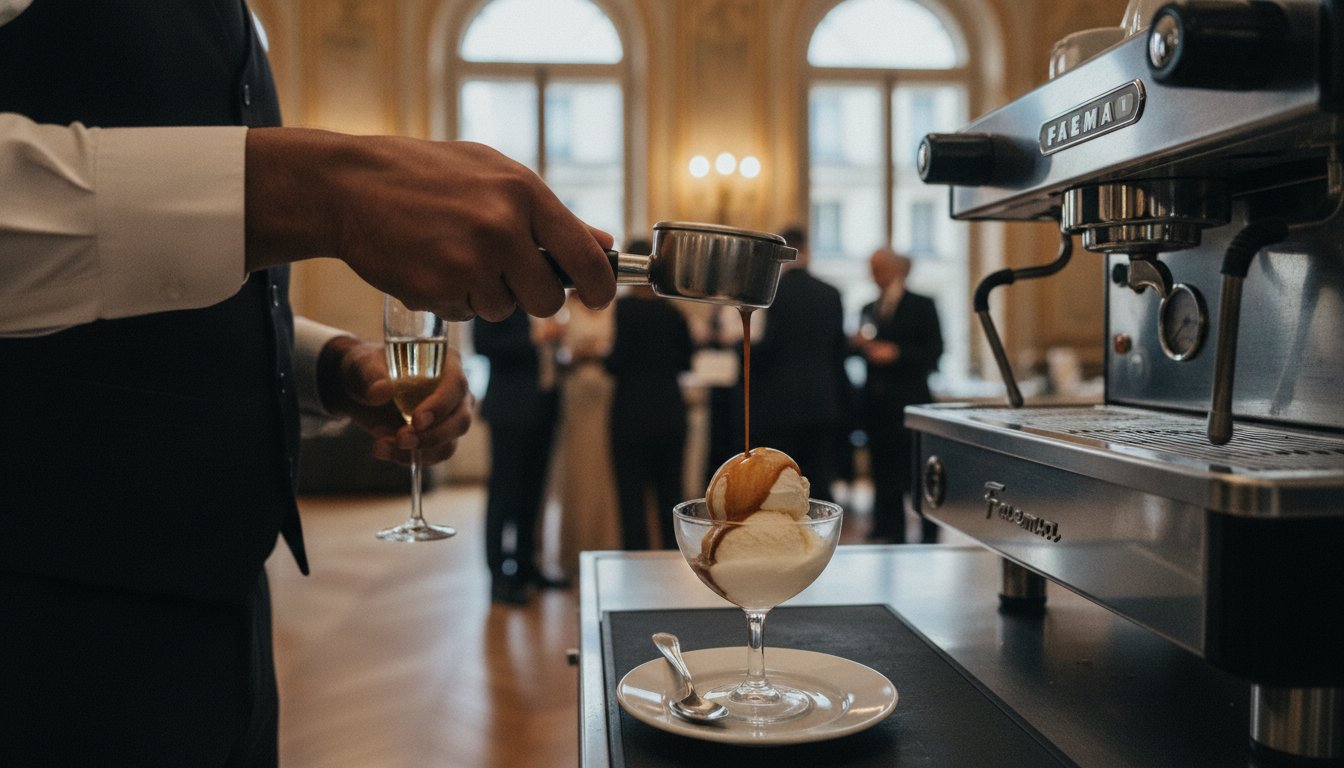
Our signature creations, such as frozen tiramisu or espresso affogato, are designed as true architectures of flavors. We don't just churn a preparation. We build a gustatory narrative. Respect for the product and the consumer guides every action, from the rigorous selection of fruits at their peak to the slow churning that guarantees that sought-after silky density. It is this serene pride of the artisan that transforms a simple treat into a moment of prestige and distinction.
The Expertise of a Master Ice Cream Maker
Precision is our signature. We attach capital importance to the maturation phases, a crucial step to allow flavors to fully develop and interact harmoniously. It is during this long, necessary, and sacred time that the subtle balance between generous creaminess and refined lightness is forged. In Saint-Germain-des-Prés, each tasting becomes an exploration. We invite you to rediscover the nobility of a pistachio with earthy notes or the intensity of a grand cru chocolate, worked with rigorous technical expertise that leaves nothing to chance.
Elevate Your Events with Craftsmanship
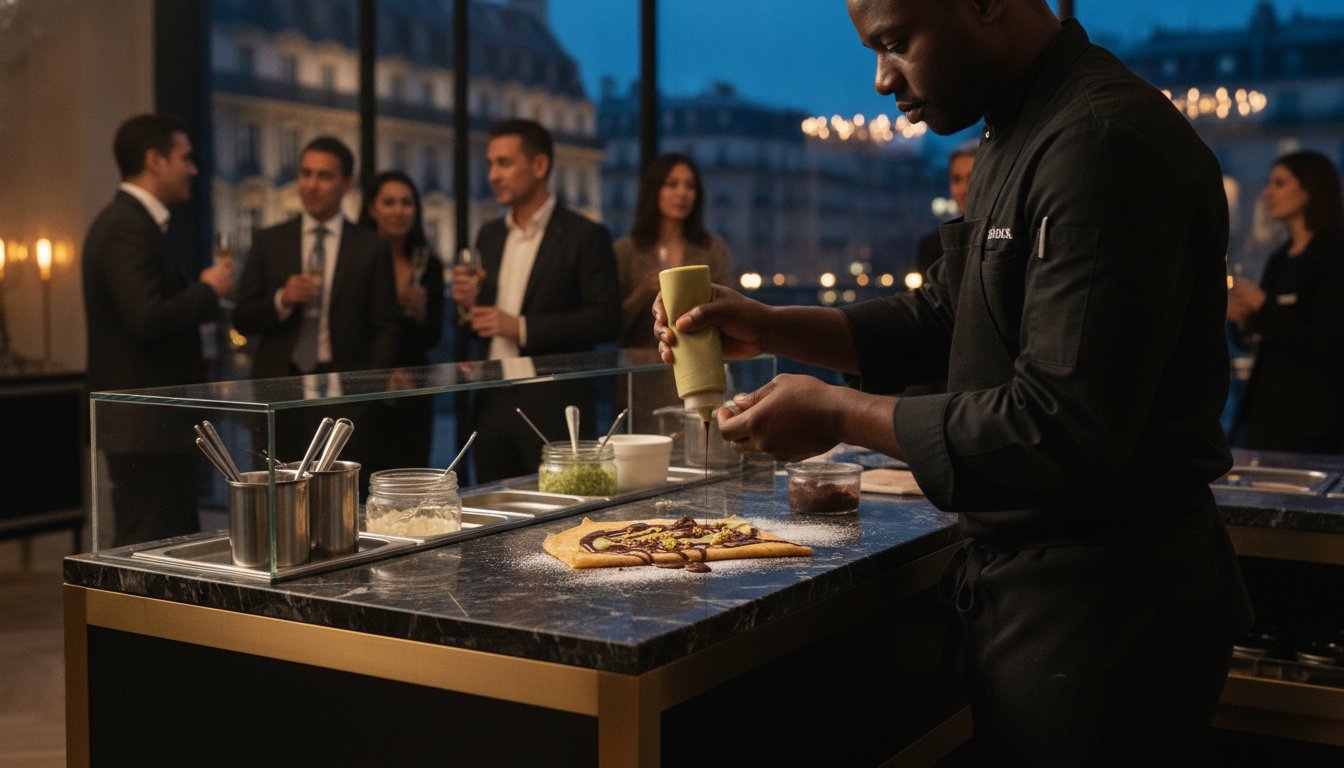
Excellence is not limited to the walls of our shop. It is invited into your most precious moments to create unforgettable memories. Choosing our catering service for events or an ice cream cart animation for a wedding means offering an authentic emotion to your guests. Your guests' perception instantly changes when faced with a product whose texture and aromatic depth betray meticulous craftsmanship. It is a mark of distinction, a modern luxury where the demanding preparation meets the fluidity of service. Discover the refined world of Angiolo and let yourself be guided towards an exceptional experience where every detail is a quest for perfection.
Awaken Your Palate to Absolute Purity
Distinguishing the difference between industrial and artisanal ice cream is an act of gastronomic resistance. It's choosing the density of a noble ingredient over the artificial lightness of injected air. It's preferring the sincerity of 100% natural ingredients to the chemical complexity of stabilizers. Now, you have the keys to decipher labels and recognize, with a simple glance, the authenticity of exceptional craftsmanship.
Under the guidance of our Sicilian master ice cream maker, Angiolo is committed to transforming every tasting into an immersion in high culinary precision. Voted among the best ice cream makers in Paris, our laboratory bans all artifice to retain only the intensity of fruit and the richness of cream. Succumb to excellence: Order our artisanal ice cream tubs and rediscover the pleasure of a perfect texture, crafted with passion and rigor.
Excellence is not a luxury. It is an undeniable truth savored with every spoonful. Take the time to discover.
Your Questions About Iced Excellence
What is the main difference between artisanal and industrial ice cream?
The difference between industrial and artisanal ice cream lies in the quality of the ingredients and air content. Artisans use fresh, raw ingredients like cream and whole milk, with no chemical additives. In contrast, the industry favors substitute vegetable fats and injects up to 50% air to double the volume of its tubs. This practice increases profitability at the expense of flavor density and product purity.
Why does artisanal ice cream melt faster?
The absence of synthetic emulsifiers and stabilizers explains this natural thermal reaction. These chemical agents, ubiquitous in supermarkets, artificially trap the structure so it resists heat. An artisanal creation, made of living, pure ingredients, simply reacts to temperature variations. This is the guarantee of an authentic product that respects the cream's life cycle without artificial means to prolong its shelf life.
How to recognize real pistachio ice cream?
Color is your first barometer of truth. Authentic pistachio, made from precisely roasted nuts, has a khaki green, brown, or slightly earthy hue. Avoid emerald green or fluorescent colors, which are sure signs of synthetic dyes. The taste should be deep, woody, and complex. The industry often uses bitter almond flavoring to mask the poor quality of its ingredients, a practice that true master artisans categorically refuse.
Does 'homemade ice cream' mean the same thing as 'artisanal ice cream'?
Absolutely not. The appellation "Artisan Glacier" (Artisan Ice Cream Maker) is a title protected by French law, requiring a state diploma or three years of validated experience. The term "homemade ice cream" is much vaguer and offers no legal guarantee regarding the origin of ingredients. An establishment can assemble industrial powdered bases in its own premises and use this mention without possessing the technical expertise of a true visionary master artisan.
Why is there air in ice cream?
Air is an essential technical component for achieving a creamy texture and preventing the preparation from becoming a solid block. Without this aeration, tasting would be impossible. The true difference between industrial and artisanal ice cream lies in the precise dosage: the artisan incorporates about 20% air to preserve maximum density, while the industry sometimes injects 100% to sell volume where the artisan sells noble material.
What additives should be avoided in ice cream?
Prioritize transparency by avoiding hydrogenated vegetable fats like palm or coconut oil. On labels, look out for emulsifiers such as mono- and diglycerides of fatty acids (E471), often used to stabilize mixtures low in cream. An artisan prefers natural binders like carob bean gum or guar gum. These noble ingredients respect your palate and digestion while preserving the original aromatic intensity.
Is artisanal ice cream more caloric than industrial ice cream?
For the same volume, an artisanal creation is often denser and richer in noble ingredients, which can increase its caloric content. However, its aromatic power provides much faster satiety. Where one consumes large quantities of light, sugary industrial ice cream without feeling satisfied, a single artisanal portion is enough to satisfy the senses. The quality of natural fats and the absence of hidden sugars transform tasting into a moment of balance.
How to best store artisanal ice cream in a tub?
To preserve its silky structure, keep your tub at a stable temperature of -18°C in your freezer. Avoid thermal shocks by only taking out the ice cream at the precise moment of tasting. If you don't consume the entire tub, place plastic wrap directly on the surface of the ice cream before closing the lid. This precaution prevents the formation of ice crystals and protects the delicate purity of the aromas against oxidation.